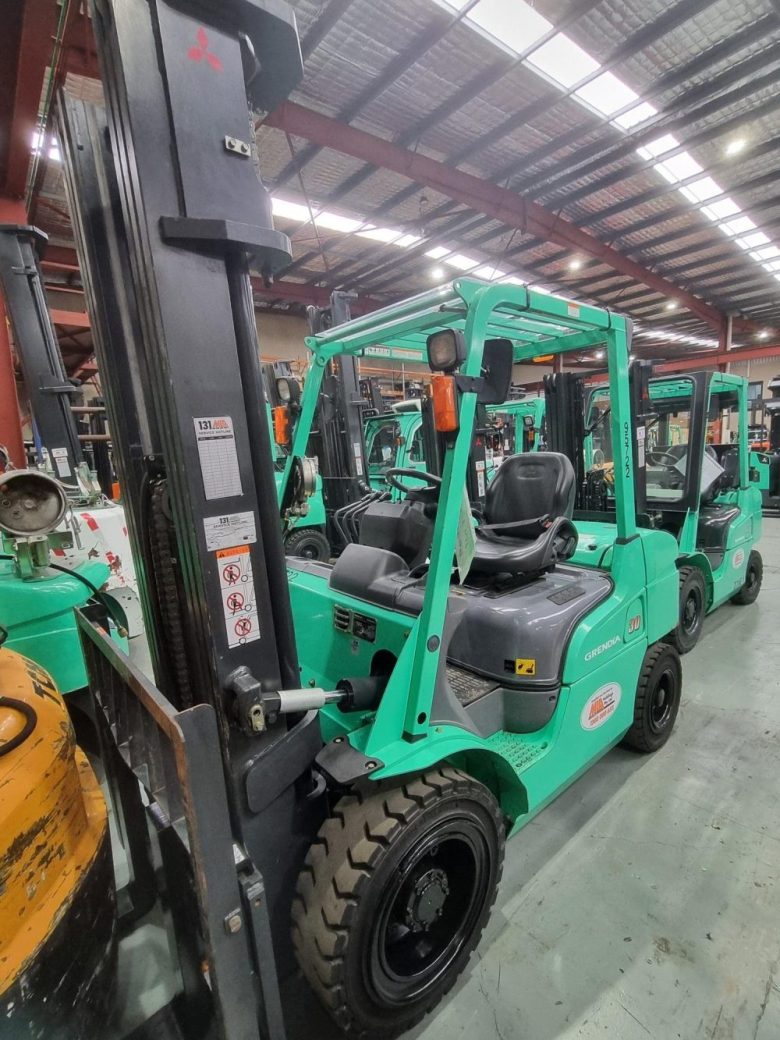
An electric forklift may look like the obvious choice for indoor pallet movement, quiet warehouse work or equipment handling near occupied areas. The hire decision is incomplete until the charging arrangement and work pattern are understood. A forklift that suits the load but cannot be charged between useful work periods may create another interruption. For one indoor machinery movement, the available charge may comfortably cover the task. A continuing warehouse role can require a clearer plan for when and where the machine returns to charge. The same decision applies whether the customer runs an industrial operation, manages a property or is arranging one suitable load movement for the first time.
Arundel forms part of an established Gold Coast industrial employment area, with medium-impact industrial activity around Demand Avenue and related warehouse, service and commercial premises across the suburb.
Those workplaces can create a natural role for electric equipment. Pallets may need to be moved inside a warehouse, stock may travel between storage and a work area, or machinery may need to be positioned without introducing engine emissions into a poorly ventilated indoor environment.
Electric should not become an automatic answer simply because the work is under a roof. The load, lift height, turning space and required travel still matter. The rental must also remain available for the useful part of the job.
A person arranging one indoor delivery may only need enough operating time for unloading and final placement. A stock project or facility change may involve repeated movement across several work periods. An established operation may need regular electric equipment with a dependable opportunity to recharge.
The most useful starting point is the period in which the forklift will actually be moving loads.
Some jobs are concentrated. The forklift completes an unload, positions the item and has no further work. Others contain repeated travel, lifting and waiting throughout the day. The equipment may be used heavily during receiving, become quieter for a period and return to work later.
That pattern affects the charging decision more than a general description such as “light warehouse use.”
The customer should know whether the forklift can return to a suitable charging position without abandoning active work. A project with natural pauses may accommodate charging differently from an operation that expects the machine to remain available through a continuous work period.
MLA’s Gold Coast forklift hire range includes electric, counterbalance, and warehouse equipment for specific jobs and ongoing rental requirements. The equipment discussion can compare the load and indoor role with the available charging arrangement rather than treating power type as a preference.
Where charging cannot support the intended work pattern, another forklift type or another allocation of the task may be more practical.
A power outlet alone does not confirm that a charging arrangement is suitable.
The charger must be compatible with the forklift and battery. The charging location also needs to suit the battery technology, manufacturer requirements and workplace conditions. Lead-acid battery charging can generate gases and requires appropriate ventilation. Electrical work or circuit changes must be handled by people with the required qualifications.
The rental enquiry does not need to become an electrical design exercise. It should establish whether a suitable charging position already exists and whether the proposed machine can use it.
Charging should not block a doorway, normal materials movement or the area where people need to work. The forklift must also be able to reach the position while it still has sufficient charge remaining.
Where the job is too short to require on-site charging, that should be made clear during the hire discussion. No charger, battery performance or uninterrupted operating period should be assumed without checking the selected equipment and actual work.

Battery power does not change the basic forklift selection requirements.
The machine must have sufficient rated capacity for the load, lift height and any approved attachment. A compact three-wheel counterbalance forklift may suit manoeuvring in a restricted indoor area, while a four-wheel electric model may be considered for another load and operating pattern. Reach trucks and other warehouse products serve different storage and aisle requirements.
MLA’s Nichiyu electric forklift range includes examples from the electric counterbalance and reach-truck categories. The product category should follow the work, rather than assuming that all electric forklifts perform the same role.
For an ordinary one-off job, identify what must move and where it needs to finish. For continuing use, add the repeated travel and charging opportunity that will shape the rental decision.
An owned electric forklift that no longer completes its usual work period may have a battery, charger or machine condition that requires assessment. Reduced operating time should not automatically be treated as proof that the battery alone is at fault.
The forklift identity, battery details, charger information and reported symptoms can help separate a charging-arrangement issue from a service or repair requirement. MLA’s Gold Coast forklift service and repair can address the equipment condition, while Gold Coast parts support can assist with accurately identified component enquiries.
Compatibility must be confirmed before a battery, charger or component is used with another machine. A charger already at the property should not be connected to a rental forklift merely because the plug or physical connection appears similar.
Temporary rental may keep a confirmed handling task available while the owned equipment is assessed. The rental role and the repair decision remain separate.


Describe the indoor task, load and point at which the forklift could return to charge.
Call MLA’s Gold Coast branch on (07) 5571 7600 to discuss forklift hire and rent in Arundel, electric-equipment suitability or an existing battery and charger concern.
Yes, where the load, operating area and available equipment are suitable. One machinery placement, pallet movement or stock task may not require on-site charging if the selected forklift can complete the confirmed work.
Not for every short job. Continuing use may require a suitable charging position and compatible equipment. Explain the expected work period and what charging facilities are already present.
Do not assume compatibility. The forklift, battery and charger specifications must be checked before equipment is connected.
Describe the periods of active travel and lifting, not only the total opening hours. The equipment and charging approach can then be considered against the real workload without promising a generic battery runtime.