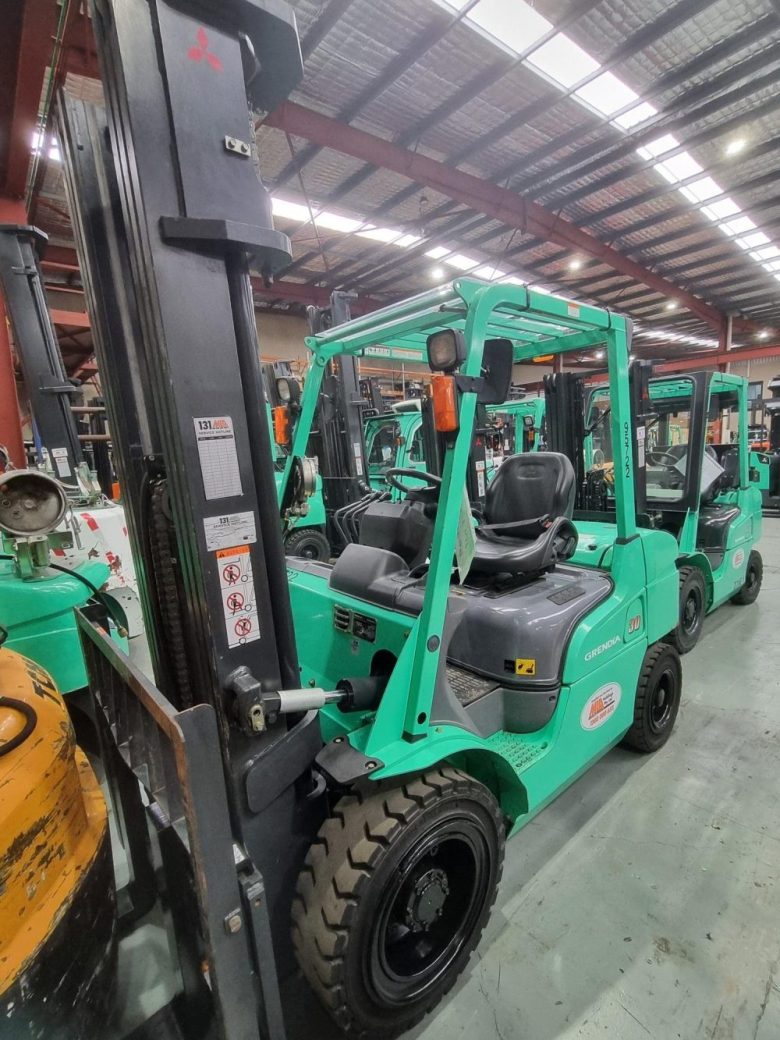
A Ballarat business may need a forklift for a single delivery, a machinery move, stock placement, a temporary project, or regular warehouse work. Some customers already operate equipment. Others are arranging forklift hire for the first time. Both should be able to start with the job in front of them rather than proving they belong to a particular precinct or industry.
MLA Complete Forklift Solutions helps customers compare one-day hire, short-term rental, project use, and longer-term arrangements based on the load, workplace, and required period. The first discussion can be as simple as what needs to be moved, where the forklift will operate, and when the work must happen.
Ballarat West Employment Zone is being developed in stages as a major industrial and employment area, with manufacturing, food processing, transport and freight among its intended activities. That growth creates one useful local rental scenario: a business may be preparing or expanding premises before it knows exactly what its permanent materials-handling pattern will look like. Hire remains equally relevant to established Ballarat workshops, warehouses, suppliers, contractors, and businesses completing a single ordinary lift.
A customer may only need to unload palletised materials, position workshop equipment or relocate stock. Another may require a forklift for a fitout, shutdown task, seasonal workload or several weeks of temporary work.
One-day hire may suit a job with a clear start and finish. Short rental may be more practical when several movements are spread across a project. Longer rental can support recurring work where the customer wants reliable access to equipment without purchasing immediately.
The decision should reflect how often the forklift will be needed and what happens when it is not available. If staff regularly wait for a carrier, leave their normal work to move materials, or arrange outside help for every delivery, a longer arrangement may solve more than a series of disconnected bookings can.
MLA’s forklift rental options cover short and longer requirements across counterbalance and warehouse equipment categories. A customer can enquire about one simple task without being pushed toward a larger commitment.
Setting up or expanding premises creates a different problem. Stock, machinery, racking or production materials may need moving before the business has enough operating history to choose permanent equipment confidently.
The old forklift specification may not answer the new question. A larger building can increase travel. Different storage may change lift height. New production work may create more frequent movement. Indoor and outdoor tasks may favour different equipment. One machine that worked at the previous site may be suitable for only part of the new operation.
A project rental gives the known work its own equipment while the business learns from real use. It can support initial deliveries, stock placement, commissioning, or early operations without requiring a permanent fleet decision to be made based on plans alone.
This does not mean every expanding Ballarat business needs temporary equipment. It means rental can create room to make the next decision based on actual workload rather than assumptions.


The customer does not need to design the complete future operation before making an enquiry. Start with the task the forklift must complete now.
Relevant details include the load weight and dimensions, required lift height, operating surface, available clearances and whether the work is indoors, outdoors or mixed. It also helps to explain how often the movement occurs and whether the forklift will travel repeatedly or remain within one defined area.
A counterbalance forklift may suit loading and general material movement. Warehouse equipment may be more appropriate where the main task involves pallet storage, internal travel or narrower operating areas. Power type, attachment requirements, and rated capacity must align with the actual load and workplace.
The selected forklift also needs an authorised operator and a work area where people can remain clear of equipment movement. Loads should have a defined receiving and placement point, and any attachment must be approved for the machine and reflected in its rated configuration.
These considerations apply to both a one-day booking and a longer rental. The aim is not to predict every future need. It is to avoid hiring equipment that solves an imagined version of the operation while the immediate job remains difficult.
An owned forklift may still have an important role at the original premises or in established Ballarat operations. Moving it too early can solve one problem while creating another.
A separate rental may allow existing equipment to remain with customer orders, workshop work or normal warehouse activity while the new task progresses. Once the overlap ends, the business can review whether the additional capacity is still useful.
The condition of the existing forklift also matters. A planned move or expansion is a poor time to carry an unresolved fault into a more demanding workload. Forklift service and repair may be needed before the machine changes role, while rental may cover a defined requirement if it becomes unavailable.
Parts support should begin with an accurate identification of the forklift and component, followed by a clear description of what has changed. Service, parts and rental should support the same commercial outcome: keeping useful work moving while the equipment decision is resolved.


Whether the requirement is one ordinary lift or several months of support while a Ballarat operation grows, begin with the task that must be completed now.
Share the immediate task through MLA’s contact page, or call 1300 166 660 to discuss forklift hire and rent in Ballarat for a delivery, project, temporary capacity or longer rental arrangement.
Begin with the confirmed task. A rental may cover initial deliveries, equipment placement, stock movement or early operations while the broader requirement becomes clearer.
The term should cover the known handling work and any realistic overlap with existing operations. It can be discussed around the project rather than an arbitrary date.
Not automatically. Consider what work it still performs, whether the new task differs and whether moving it would leave the original operation without useful equipment.
Raise the service condition and any known symptoms before assigning it a different or more demanding role. Rental may be considered separately where another task still needs equipment.