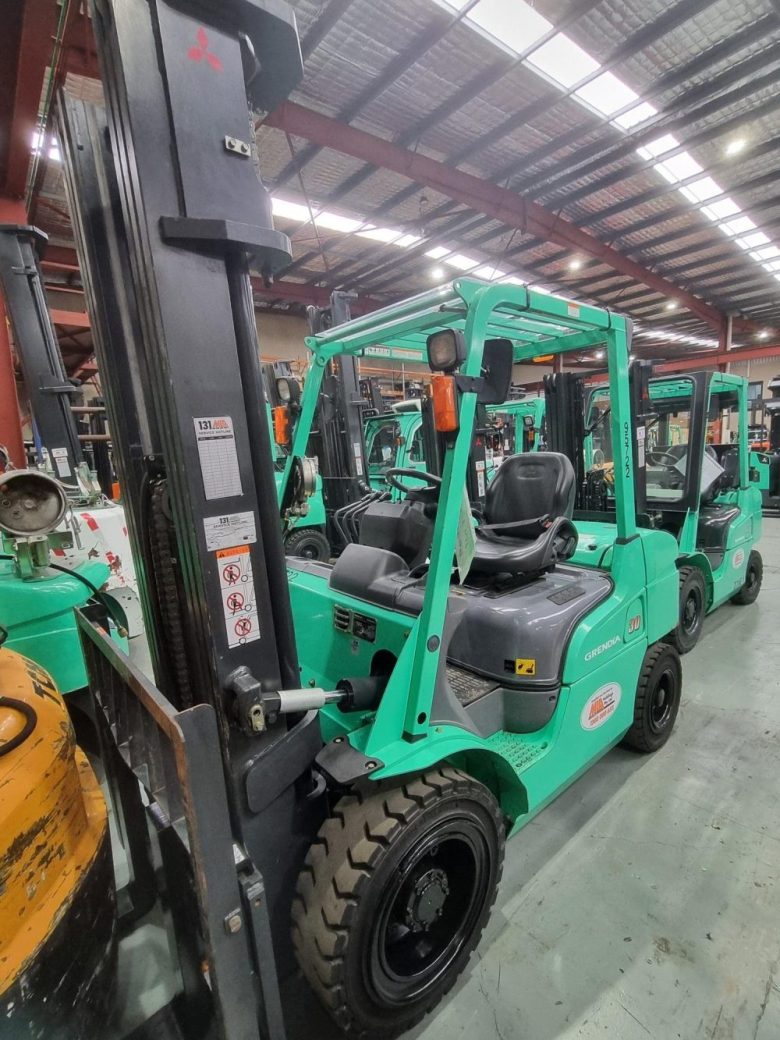
The old machine is being disconnected, contractors are inside the work area, and the replacement equipment has arrived early. The site’s normal forklift is still needed for raw materials and finished goods, but the installation team also needs repeated lifts. A project that looked like one machinery movement can quickly become a day of competing priorities.
The Bayswater Business Precinct is one of eastern Melbourne’s major employment and manufacturing centres, with more than 5,000 businesses across manufacturing, construction, wholesale, retail and related industrial activity. Factory upgrades therefore need to be planned around work that may continue elsewhere on the same site.
Assigning a separate rental to the installation keeps the existing fleet with receiving, production and dispatch. Where the changeover will place additional pressure on current equipment, servicing and parts planning can be completed before access becomes restricted or the contractor programme begins.
Borrowing a standard forklift may seem simpler than bringing in another machine. The problem arises when production and the project need it simultaneously.
A delivery is waiting at receiving. The contractor wants a component moved. Finished goods need to reach dispatch, and removed equipment is blocking the project area. The shared machine is the point where all schedules meet.
A dedicated rental can be assigned to:
Receiving machinery and contractor materials
Moving equipment into the prepared work zone
Supporting repositioning during installation
Clearing packaging or removed components
Assisting with commissioning and restart work
The permanent forklift can continue serving normal operations. This is more useful than adding equipment without deciding which tasks it is there to complete.
The booking should cover more than the headline delivery.
Before installation, the forklift may unload crates, reorganise staging or create access. During the change, several smaller movements may replace the single lift shown on the contractor schedule. Afterwards, packaging, old equipment and temporary materials still need to be removed.
Send the planned dates, confirmed load information, required lift heights and the areas the machine must enter. Supplier drawings can clarify whether the load has suitable fork points, an offset centre of gravity, or other handling requirements.
Allow realistic time for delays. A commissioning problem or a change in placement position should not leave the site without equipment during the final stage.
Customers can review forklift rental options for Melbourne when comparing a short project booking with a longer arrangement.
A factory change can place additional pressure on the forklifts that remain in production.
Normal routes may become longer because part of the floor is closed, and one machine may complete more cycles while another is assigned to the project.
Known faults and overdue maintenance should be addressed while the schedule can still accommodate them. The Melbourne forklift service and repair team handles planned servicing, fault investigation and repairs for equipment that must remain dependable through the change.
Include the make, model, serial number, operating issue and project date. That connects the service discussion directly to the work that must continue while contractors are onsite.
Known wear items or recurring faults should be identified before the changeover, while there is still time to source the correct component and adjust the project plan.
For a parts enquiry, record the forklift make, model, and serial number, then add clear photographs and a description of the fault. This matters when access to the machine becomes difficult due to barriers or project equipment in place.
A small component can delay several people when it is discovered after the shutdown has begun. Identifying it early protects the project sequence.


Once the machinery or production line changes, forklift use may change with it.
Raw materials may enter from a different side. Finished goods may be staged elsewhere. A higher lift, a longer travel path, or a different shift pattern can alter which machine is busiest.
For businesses operating several forklifts, fleet-management reporting may help track utilisation, operator activity, maintenance alerts and impacts after the new process begins.
That information can support later decisions about rental length, service planning or whether another machine is genuinely needed after the project forklift leaves.
Not every Bayswater enquiry begins with a machinery installation.
A forklift may be needed for one delivery, a warehouse rearrangement, short production support, seasonal demand, temporary stock movement, construction work or replacement cover during repairs. A longer rental is available when the task continues or the business does not want to make an immediate ownership decision.
For routine work, the hire brief can remain simple: what must move, where the machine will operate and how long the extra capacity is needed.


Installation work changes the people, barriers and temporary storage inside a factory.
Contractors may not know the usual forklift routes. Components can block sightlines, and a laydown area may occupy part of a normal pedestrian or vehicle path. Before work begins, agree where the project forklift may travel, who can request a movement and where loads can be left.
The operator must hold the appropriate licence for the forklift and task. Pre-start checks remain necessary, and a fault or impact should be reported rather than passed into the next project stage.
Safety planning should protect the agreed work sequence, not wait until contractors and production staff are using the same area.
The hire period can cover unloading, installation, commissioning and restart work rather than ending immediately after the machinery is positioned.
Include likely commissioning and restart time in the original enquiry. If the schedule changes, raise the revised date before the booking reaches its planned end.
Planned servicing can be arranged before access becomes restricted or the existing fleet takes on additional work.
It may be useful where several machines or operators share work, and clearer information is needed about usage, maintenance or impacts.
Confirmed weight, overall dimensions, fork or lifting points, centre-of-gravity information and the intended final position can help define the handling requirement.
Send the Bayswater address, machinery or load information, project stages and required dates before the contractor schedule becomes difficult to change. The same project-planning support is available for work in Bayswater North, Boronia, Wantirna, Scoresby and Kilsyth.
Use the enquiry to define which tasks belong to the rental forklift and which movements must remain with the existing fleet. Call 1300 166 660 before the installation date becomes the deadline for every unresolved handling decision.