

A pallet sitting at the back of a truck needs to reach the other side of a warehouse. Another pallet needs to finish on an elevated storage level.
Those jobs can begin with the same load and still require different equipment.
For customers arranging forklift hire in Capalaba, the destination is therefore worth establishing early. If the work is mainly horizontal transfer at floor level, a powered pallet mover may be enough. If the pallet needs to rise into suitable storage, a stacker or another forklift configuration may be required.
MLA Complete Forklift Solutions can help narrow that choice around the movement itself rather than starting with a machine name. That keeps a straightforward hire straightforward while making sure the equipment can complete the last part of the job.
Around Jones Road and Capalaba’s wider commercial and industrial area, smaller workshop and warehouse premises sit alongside the suburb’s larger retail and business activity.
In a compact unit, equipment has to earn the space it uses.
A business receiving several palletised deliveries may only need stock shifted from the roller door to a floor position. A workshop could need a pallet moved across the premises before its contents are unpacked. A contractor using a unit for project materials may need the same straightforward transfer.
Another customer can occupy a similar-sized warehouse and have a completely different problem because the pallet needs to be raised into suitable storage.
The suburb does not create one universal machine choice. Its mix of compact industrial and commercial premises makes the final pallet position a particularly useful way to decide between options.
General customers fit naturally into that decision too. Someone arranging a single substantial pallet movement at suitable private premises does not need to own a warehouse fleet before MLA can help. The requirement simply needs to be a genuine materials-handling job with appropriate equipment and operating conditions.
If the pallet stays at floor level, horizontal movement is the main job.
Powered pallet movers are designed for pallet transfer and can suit situations where the customer wants powered movement without specifying a conventional counterbalance forklift for work that does not need one.
Load capacity still matters, along with floor, pallet condition, and available space.
Once the pallet needs to rise, the decision changes.
A pedestrian stacker can combine pallet movement with vertical lift, provided the equipment suits the load, required height and storage arrangement.
That may suit a Capalaba business trying to use available warehouse height without bringing in more machine than the task requires.
Some jobs include both.
A project may involve unloading pallets, transferring some to floor positions and placing others into storage. Temporary additional handling capacity can also introduce a new role that differs from the work performed by the site’s usual equipment.
In those cases, MLA can consider the complete workload rather than assuming one machine type because the first pallet movement looks familiar.
The easiest way to separate the requirements is to look at what happens after the load begins moving.
| Job requirement | Equipment question |
| Move a pallet across a suitable level floor | Would a pallet mover provide the transfer required? |
| Raise a pallet above floor level | What stacking or lifting equipment suits the height and load? |
| Move and then place into storage | Can one suitable machine complete both parts of the job? |
| Repeatedly handle pallets in a compact warehouse | Which option fits the movement without adding equipment the customer will not use? |
MLA offers powered pallet movers for horizontal transfer and pedestrian stackers capable of lifting palletised loads vertically. The difference sounds simple, but it can save a customer from hiring a machine around the wrong part of the job.
A pallet mover can be extremely useful while the load remains on the floor. It does not become a stacker simply because the warehouse has storage above ground level.
Likewise, a customer who only needs pallets transferred between two floor positions may have little reason to specify vertical lifting capability.

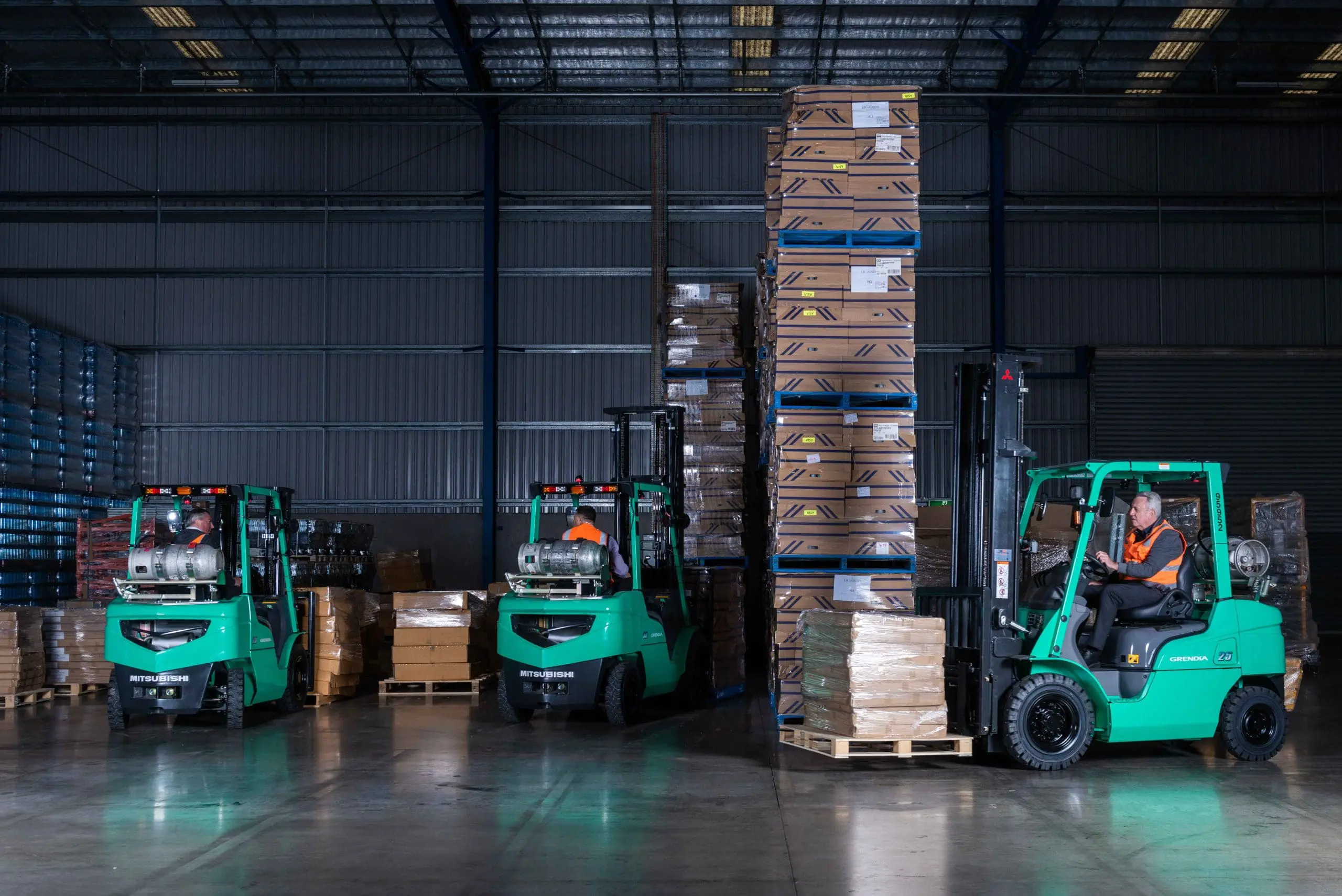
If you are unsure whether your Capalaba job calls for a pallet mover, stacker or another forklift, start by describing where the load finishes.
MLA will also need the load weight, required lift height where relevant and enough information about the operating area to consider suitable equipment.
You can review MLA’s pedestrian forklift range to see the difference between pallet movers and stackers, or send the actual requirement through the contact page.
The useful outcome is not choosing from the widest equipment range. It is identifying the machine that completes the movement the customer is paying to get done.
A retailer receiving an unusual delivery may need equipment for a concentrated task. A fit-out contractor might require pallet handling throughout a defined project. An established operation can need another machine because the volume or type of work has temporarily changed.
The same equipment logic applies across those situations.
If every pallet remains at ground level, rental duration does not create a vertical-lift requirement. If pallets need regular elevated placement, a longer period on site does not make a floor-transfer machine suitable for that role.
Where an owned machine is unavailable, the current pallet movements should also be reviewed before rental equipment is selected. The useful replacement is the one suited to the work that actually needs covering, which may differ if the role has changed over time.
This lets MLA support short-term hire, project requirements and longer rental needs without treating the calendar as the equipment specification.


Even floor-level handling depends on a load that can be engaged and moved appropriately.
A damaged pallet, unstable load or unsuitable pallet construction can change what initially looks like a straightforward powered transfer. Operators should check the load and understand the equipment they are using before movement begins.
The same applies to stackers. Lift height and capacity only help if the load and pallet are suitable for the machine and remain stable while being raised.
Equipment condition matters within those normal decisions. If an owned pallet mover, stacker or forklift develops a fault affecting lifting, steering, braking or load handling, MLA can assist with service and repair enquiries. Parts support can follow where inspection identifies a specific component requirement.
There is no need for maintenance to take over a Capalaba rental enquiry. It belongs where it affects whether existing equipment can perform its intended role safely and reliably.
A customer who says, “I need to move this pallet,” has only described half the job.
The more useful question in Capalaba is where that pallet needs to finish. Floor-level transfer can point toward powered pallet-moving equipment. Elevated placement introduces a vertical-lifting requirement. A job involving both needs equipment assessed around both movements.
Once the endpoint is clear, MLA can narrow the hire around the load and the work instead of adding capability the customer does not need or discovering too late that the selected machine cannot complete the final placement.










