

A fabricated assembly can look balanced from the outside while carrying far more weight on one side. Cabinets, machinery frames, rail components, and other built-up equipment often contain motors, electrical gear, structural members, or other dense components that shift the load’s centre of gravity away from its geometric centre.
That matters when choosing a forklift for work in Cardiff. A customer may be unloading a machine, repositioning workshop equipment, receiving palletised stock or bringing in extra lifting capacity for a concentrated job. The forklift still needs to suit the movement, but some fabricated loads deserve a closer look at how their mass is distributed before the machine is selected.
Cardiff provides strong local context for this type of work. Current rail-manufacturing activity in the suburb includes production lines supporting the Tangara refurbishment program, reinforcing Cardiff’s role in advanced manufacturing and fabrication. That does not make every local hire a rail-industry job, but it does make fabricated assemblies and equipment handling a credible part of the local material-handling environment.
MLA Complete Forklift Solutions provides forklift hire and rental across Newcastle for Cardiff customers who need equipment matched to the load and site rather than chosen from appearance alone.
Imagine a rectangular fabricated unit weighing 2,000 kg.
From the outside, the item may look evenly proportioned. Internally, however, a heavy motor, transformer, drive assembly or reinforced section may place a larger share of that mass toward one end.
The overall weight is still 2,000 kg, but the forklift does not experience the load as though every kilogram were evenly distributed throughout the shape.
That changes the handling discussion.
If reliable drawings, lifting information, or supplier details indicate an off-centre centre of gravity, that information should be included in the hire brief. The fork position, load orientation, and forklift capacity all need to be considered in relation to the concentration of mass.
A machine selected only because its nominal capacity exceeds the stated load weight may leave an important part of the lift unexplored.
The same principle applies beyond large fabricated equipment.
A Cardiff workshop may need to move a machine mounted on a skid. A contractor might be receiving a crated component. A local business may only need a forklift to clear a delivery and move goods into storage.
For familiar palletised loads, the handling information may be relatively simple. Once the load becomes asymmetrical, unusually tall or internally weighted to one side, the way it sits on the forks becomes more important.
The hire discussion should therefore cover the movement the forklift will perform, including the loaded lift that places the greatest demand on the machine.
A low unload onto prepared ground can be different from carrying the same item through a workshop or lifting it onto storage. If the job includes several load types, the forklift should suit the range of movements it is expected to complete.
That keeps rental equipment aligned with the work rather than with a tonne figure considered in isolation.
Where possible, a load should be presented so the forklift can support it in a stable, controlled way.
With fabricated assemblies, that may mean confirming which side should face the mast, where the intended fork-entry points are located or whether a transport frame dictates the lifting orientation. Manufacturer or supplier handling information should take priority where it is available.
The important distinction is between where the item looks centred and where its mass is centred.
A visually symmetrical load may still require a deliberate orientation on the forks if the internal weight distribution is uneven.
This is also why the outside dimensions should not be used as a substitute for load information. Dimensions help MLA understand how the item will fit on the forks and within the operating space. Weight distribution helps explain how the item may behave once lifted.
Both can affect equipment suitability, but they answer different questions.

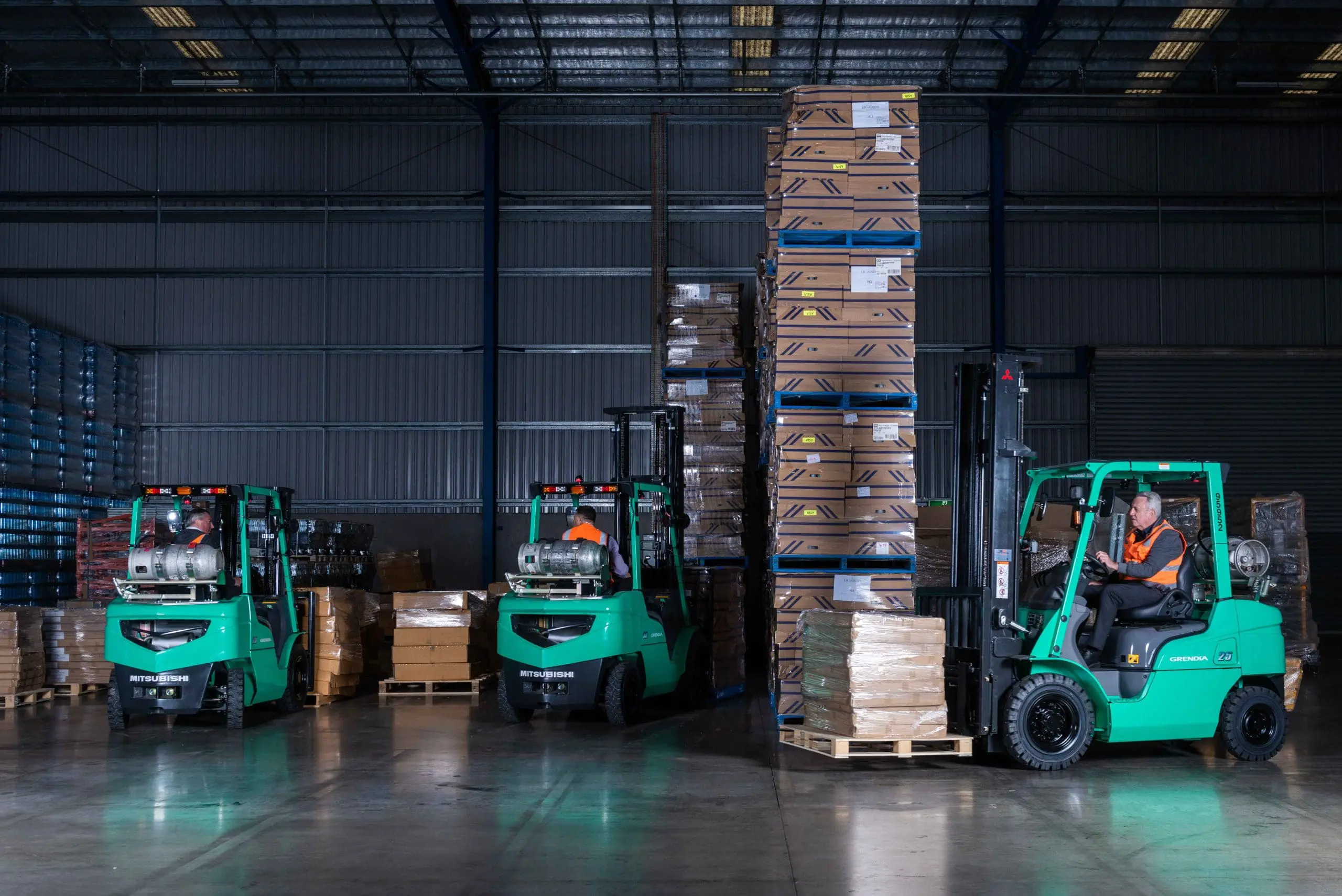
Not every customer arrives with a fabricated assembly.
A warehouse may need another forklift to handle incoming stock. A trades business might be unloading building products. A workshop can require temporary equipment while machinery, materials or finished work are being repositioned. A property or project customer may need a forklift for one defined lifting stage.
The common requirement is access to equipment suited to the work.
MLA can discuss the forklift category, capacity, and rental arrangement based on the job information provided. Where the work involves conventional pallet handling, that conversation can remain focused. Where a heavier, higher or unevenly weighted item is part of the workload, the equipment choice can account for it before the booking is finalised.
This makes forklift hire in Cardiff useful for both smaller handling requirements and more demanding industrial work.
The process starts with a description of what needs to move.
For a pallet unload, the load weight, lift and operating area may provide enough information to begin narrowing the equipment. For a fabricated unit, include any available information on its centre of gravity, lifting orientation, or internal weight distribution.
MLA can then discuss a forklift that suits the expected load and movement.
Before the job begins, the work area should be ready for the supplied equipment, and the forklift operator must meet the requirements applicable to the machine and workplace. Any purpose-built lifting points, transport frames or attachments involved in the load should also be identified before handling begins.
The amount of preparation should follow the job. A simple delivery does not need the same equipment discussion as a large asymmetrical fabrication.


Some Cardiff businesses may hire additional equipment while continuing to use forklifts they already own.
If an owned machine has a defect, damage or a change in performance, that condition should be assessed separately from the rental decision. MLA also provides servicing and repair support for forklift equipment, with parts requirements determined by the machine and the condition found, rather than assumed based on the task being performed.
For fabricated loads with an unusual centre of gravity, the important safety question remains whether the forklift being used has the rated capability and configuration required for that movement.
That can involve the load centre, lift height, any attachments fitted to the machine, as well as the total load mass.
If the next Cardiff job involves a machine, cabinet, frame, or another fabricated unit, provide any available information on where its weight is concentrated and its total mass.
That can help separate a genuinely centred load from one that only appears centred from the outside.
For palletised stock, workshop handling, or another forklift task, describe the load and movement involved, and MLA can discuss a rental option for the work.
Contact MLA Complete Forklift Solutions to arrange forklift hire or rental for work in Cardiff.










