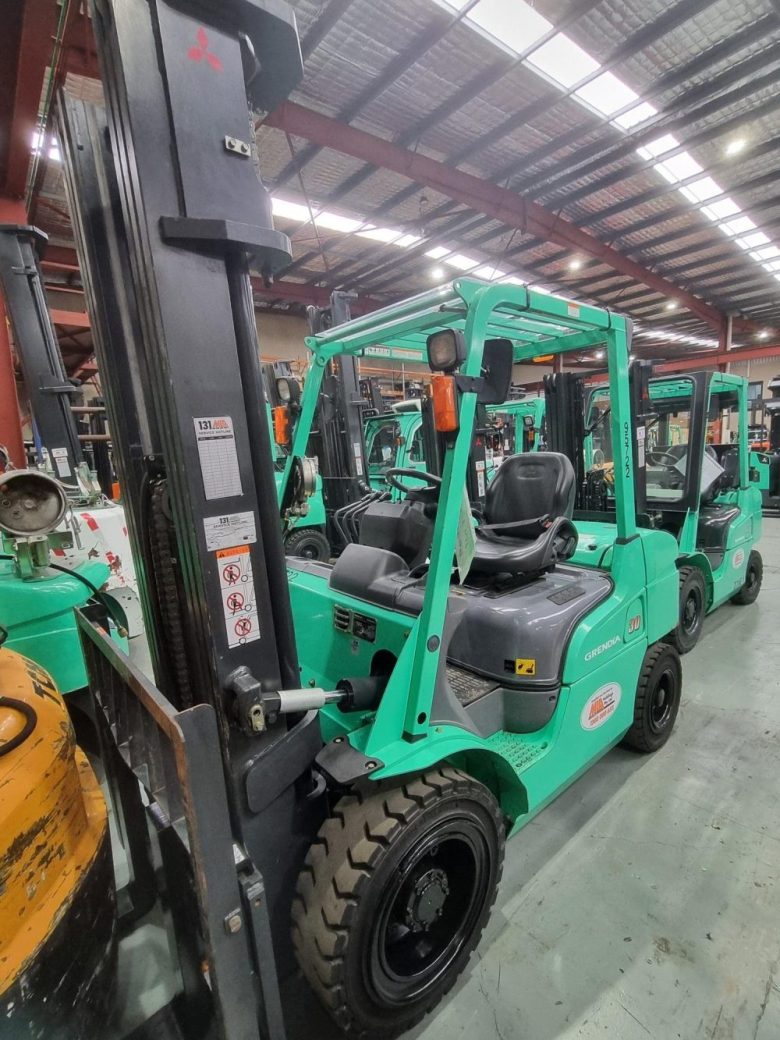
Which team used the forklift last? How many hours did it run during the shift? Was the machine genuinely unavailable, or was it parked in another department? Did the reported impact receive attention, and is the next service being planned from actual usage or an estimate? When several operators, work areas or shifts share equipment, those questions can become difficult to answer.
Clayton forms part of the Monash National Employment and Innovation Area, where manufacturing and logistics operate alongside technology, health, research and professional services. For a business managing several machines or users, forklift hire and rent in Clayton may solve an immediate capacity problem, while fleet reporting can show whether the longer-term issue is utilisation, task allocation, maintenance or operator access. One-day deliveries, machinery movements, warehouse work and project rental remain available for smaller or straightforward jobs.
Without clear usage information, equipment decisions often begin with comments from the floor.
One team says there are never enough forklifts. Another believes a machine spends most of the day idle. A supervisor requests another rental because work is waiting, while the maintenance team sees the same forklift accumulating hours faster than expected.
Each complaint may be valid, but it only describes one part of the operation.
A clearer fleet picture can help establish:
This does not mean every Clayton business needs a complex system. It means that a fleet decision should be based on more than the loudest delay of the week.
Adding another forklift can reduce waiting, but it can also hide an allocation problem.
If the new machine is not assigned to a shift, task or work area, it may simply join the same shared queue. Staff continue to use whichever forklift is closest, and the business gains more equipment without learning why the original fleet was insufficient.
Before extending a rental or changing the permanent fleet, define:
The work currently being delayed
The hours when the delay occurs
The machine or department involved
The result expected from extra capacity
The period needed to test the change
This turns rental into a controlled response rather than an automatic reaction.
The same discipline applies to general hire. A Clayton customer may need a forklift for one delivery, a laboratory or machinery relocation, warehouse overflow, construction work, temporary replacement or a larger project. The job does not require fleet analysis before equipment can be arranged.
The information matters only when it leads to a practical change.
| What the operation shows | What it may mean | Practical response |
| Two teams regularly wait for one machine | Genuine overlapping demand | Assign temporary rental to one shift, zone or task |
| One forklift records long idle periods | Equipment may be poorly allocated | Reassign the machine before adding capacity |
| One unit accumulates hours much faster | Workload is uneven | Review task allocation and service timing |
| Impacts or faults repeat around one activity | The task or route needs attention | Inspect the equipment and review the operating process |
| Charging or refuelling interrupts the shift | Energy planning does not match usage | Adjust the schedule or discuss another equipment arrangement |
A short rental can be used while the operating pattern is reviewed. It may support a busy shift, cover a defined department or protect production while an existing machine is inspected.
Where the evidence shows that additional capacity is genuinely needed, a longer rental can be considered with a clearer role from the start.
The forklift fleet-management system provides information on equipment use, operator activity, maintenance reminders, impacts and energy consumption for businesses seeking greater visibility.


A servicing schedule becomes less reliable when actual machine use differs from the assumptions behind it.
One forklift may complete far more cycles than another. A machine assigned to a particular department may begin working across several shifts. Another may spend long periods parked before being used heavily during a project.
Usage and maintenance alerts can help identify when attention is approaching, but they do not replace inspection or diagnosis.
Where a fault is reported, the service enquiry should include the equipment make, model, serial number, symptoms and the work that depends on the machine. For parts identification, add photographs and any available warning or error information.
Temporary hire may keep the affected task operating while the machine is serviced or repaired. The replacement does not need to serve every department if the urgent requirement pertains to a specific part of the operation.
A shared fleet should not mean unclear responsibility.
Authorised operator access, usage records, impact reporting and pre-start checks can help a business understand who used a machine and whether an issue was raised before the next shift.
That information should support a safe operating process:
Technology does not replace supervision, training or site controls. It gives the business more useful information for applying them.


A useful assessment should begin with the fleet as it operates today.
Prepare the number and type of forklifts, shift pattern, main work areas, known delays, servicing concerns and any current rental equipment. The request can cover a Clayton site and, where relevant, nearby operations in Huntingdale, Notting Hill, Clayton South, Oakleigh South or Mulgrave.
Use MLA’s contact form to request a fleet discussion or system demonstration. Include whether the immediate need is additional hire, better usage visibility, maintenance planning, operator accountability or a combination of these issues.
For a direct conversation, call 1300 166 660 with the number of machines and the problem the business is trying to measure.
No. It may also be useful where a smaller number of machines are shared by several operators, departments or shifts and the business needs clearer usage information.
Yes. A temporary machine can be assigned to a defined task, shift or work area while utilisation and delays are assessed.
Available functions may include machine usage, operator activity, idle time, maintenance alerts, impacts and battery or fuel information.
No. Reporting can highlight usage, reminders or incidents, but inspection, fault diagnosis, repair and parts identification still require appropriate service support.
Yes. Hire is also available for suitable deliveries, warehouse tasks, machinery movements, temporary replacements, project work, and longer-term operating requirements.