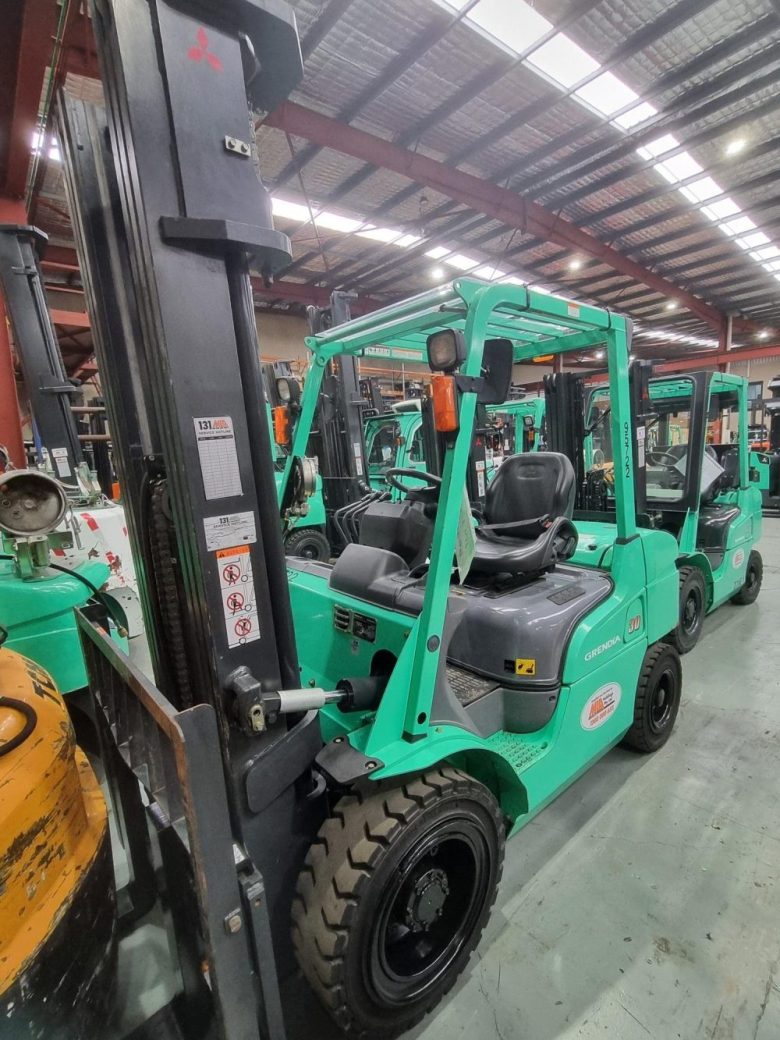
A driver can reach the correct Dingley address and still end up on the wrong side of the job. The map pin may lead to reception, customer parking, or a residential-facing street, while the warehouse door, commercial gate, and turning area are elsewhere. By the time the vehicle is redirected, useful hire time has already been lost.
Dingley Village combines established residential areas with warehouse and industrial properties around Boundary Road and its commercial edges. Forklift hire is available for one delivery, a warehouse task, machinery movement, project work, temporary replacement or a longer rental. Confirming the commercial approach early allows the hire to be planned around the actual unloading point, clearances, travel route and work area rather than the street address alone.
The arrival instructions should do more than help the driver find the gate. They should explain how the forklift will enter the job site, where the delivery vehicle can park, and how the load will reach its final position.
That information can change the equipment discussion. A longer travel distance may affect the operating plan. A narrow commercial entrance may place more importance on overall machine dimensions and turning room. If the truck must stop away from the warehouse, the surface and route between the two points become part of the hire brief.
The practical sequence is:
Confirm what needs to move.
Identify the commercial entrance.
Choose the truck standing position.
Check the forklift route and clearances.
Confirm the final placement area.
Match the booking period to the full task.
This gives the rental a defined purpose. It also reduces the risk of arranging a machine around one load while overlooking the route it must travel.
Customers comparing a short booking with a longer arrangement can review forklift rental options for Melbourne.
A Dingley customer may need a forklift for a single truck unload, several days of stock movement or an ongoing operating requirement.
A short hire may suit a confirmed delivery, machinery move, warehouse rearrangement, or temporary project. A longer rental may be more practical when the same handling task recurs each week, seasonal demand continues, or the business needs extra capacity without making an immediate ownership decision.
A temporary replacement can also be assigned to work that cannot pause while an existing forklift is being serviced or repaired. It may cover one warehouse area, one shift, or a defined group of essential loads, rather than taking over every task on-site.
The key is to explain both the job and the access. A suitable forklift still needs a workable route into the property.
The clearest instructions are usually short and specific.
Include:
A marked photograph can be more useful than another paragraph of directions where several entrances look similar.
The same arrival note should reach the person arranging the forklift, the delivery driver, the warehouse contact and whoever will organise collection. Even when each person receives a different version, the site can still lose time to redirect vehicles.


The best entrance for delivery may not remain available when the forklift is collected.
Customer pickups may occupy the front area later in the week. Stored goods can narrow the original route. Project materials may change where the vehicle can turn, or a shared gate may operate differently outside normal hours.
Before the rental ends, confirm the collection date, access time, gate, forklift parking position and on-site contact. Send updated instructions where the site no longer matches the original arrival note.
This prevents a well-planned delivery from ending with a collection vehicle unable to reach the machine.
A forklift fault does not remove the access problem.
For servicing or repairs, provide the commercial entrance, machine location and any restrictions affecting the work area. Add the make, model, serial number, symptoms and the tasks that depend on the forklift.
For a parts enquiry, clear equipment details and photographs provide a stronger starting point than ordering from memory. If the machine cannot complete essential work, rental can be organised around the affected task while inspection, repair or parts identification proceeds.
Keeping the arrival note with the equipment records saves the business from explaining the property again each time support is needed.


Once the forklift is on site, the route should remain separate from customer parking, pedestrian movement, and vehicles not involved in the job.
Before work begins:
The operator must hold the appropriate high-risk work licence for the forklift and task. A short hire period is not a reason to improvise through a blocked gate, crowded forecourt or unsuitable alternative route.
Yes. One-day hire can suit a truck unload, machinery movement, warehouse task or another defined handling job.
Provide the full address plus the commercial gate, preferred approach, loading door and onsite contact. A marked photograph can help distinguish the correct entrance.
Yes. Recheck the route before collection and send updated instructions if vehicles, stock, opening hours or project work have changed the original access.
A temporary hire can be assigned to the loads, shift, or work area that must continue while the normal machine is unavailable.
Use MLA’s contact form to send the job dates, load details, commercial entrance and a photograph of the correct gate where useful. Include the route, unloading position and any turning or clearance restriction.
Support can also be discussed for nearby commercial areas including Braeside, Heatherton, Keysborough and Springvale South.
Call 1300 166 660 when the approach is difficult to explain in writing. The route should be settled before the forklift or delivery vehicle starts towards Dingley.