

One commercial unit can contain several kinds of work. Stock may be received and stored on the ground floor, customers or staff use the office area, and a mezzanine provides another level of accommodation. A forklift only belongs in the parts of that setup where mechanical handling is actually planned.
For Erina customers, that might mean unloading stock into a warehouse, positioning machinery inside a workshop, moving materials during a fit-out or dealing with a heavy delivery that only creates a short-term lifting requirement. Forklift hire and rental through MLA Complete Forklift Solutions can be arranged around that work, whether the customer operates from an industrial unit, commercial premises or another suitable site.
A business may need very little from its forklift beyond receiving goods and placing them where the next stage of work begins.
Palletised products can move from the receiving point into ground-floor storage. Workshop equipment may need positioning before installation. A tradesperson could have materials arriving for a commercial project, while another customer needs temporary handling capacity as stock is rearranged.
These jobs can remain focused on the load and movement involved.
Machinery should have a suitable way for the forks to support it. Packaged goods need to remain stable on their carrier. Where the selected forklift will work inside a unit, the usable room for the intended movement can also influence the equipment choice.
MLA’s forklift rental range gives customers access to different material-handling equipment without requiring permanent ownership for work that may only arise during a delivery, project or change in workload.
Erina’s commercial property mix gives the locality a specific handling consideration. Newer light-industrial developments include units where ground-floor warehouse space sits beneath or alongside first-floor office and mezzanine accommodation.
A recently completed unit at The Sawmill on The Entrance Road, for example, combines ground-floor warehouse space with first-floor office and mezzanine areas. Other industrial premises around Bonnal Road also use warehouse and mezzanine configurations.
For forklift planning, those different areas should be treated according to their purpose.
If goods are being unloaded and stored entirely at warehouse level, the forklift requirement can stay with that ground-floor movement. The presence of an office or mezzanine above does not make the whole building part of the forklift route.
A different question arises when goods ultimately need to reach another level. The customer should establish how that part of the premises is intended to receive materials rather than assuming the forklift used downstairs also solves the vertical transfer.
The practical distinction for Erina is therefore ground-floor forklift handling versus upper-level office or mezzanine use within the same unit.
It can be tempting to describe every part of a commercial unit when arranging equipment. Most of those details may never affect the forklift.
Consider a business receiving packaged stock through a ground-floor roller door. The goods stay at warehouse level and move a relatively short distance into storage. The offices upstairs have no role in that movement.
The hire can be planned around the warehouse work.
Another tenant might receive machinery for a workshop occupying the same ground floor. In that case, the machine’s mass, transport base and intended placement may deserve more attention than the building’s upper level.
This keeps the customer conversation practical. Describe the space the forklift will actually enter and the loads it will carry there. Other areas of the premises only become relevant when the planned movement genuinely reaches them.

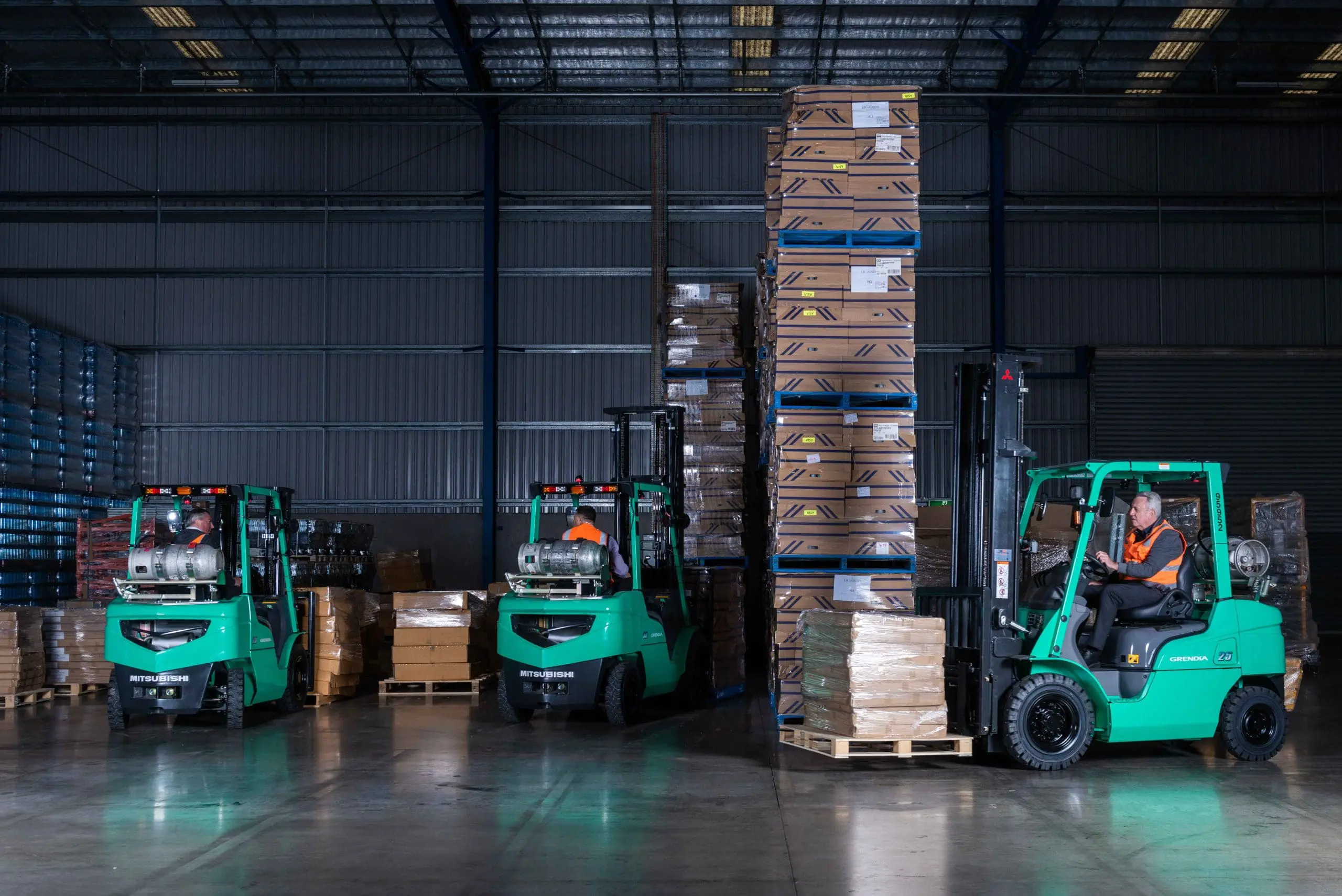
A single delivery can contain items with different destinations.
Warehouse stock may remain downstairs. Office furniture could be intended for an upper level. Equipment for a workshop might need mechanical positioning on the ground floor.
That does not mean every item belongs on the forks.
The forklift can handle the goods suited to its part of the receiving process, while other materials follow the building’s appropriate access or handling arrangement. Separating those destinations before unloading can prevent the forklift booking from being designed around work it will never perform.
This is particularly helpful during business relocations and fit-outs, when many different items may arrive close together. The customer can identify the genuinely heavy ground-floor movements and keep the remaining delivery tasks separate.
An existing forklift may already suit routine warehouse work. If a new delivery or project introduces another requirement, compare the new movement with the work that machine normally performs before deciding whether additional rental equipment is needed.
A second forklift can make sense where overlapping handling work requires more capacity or a different machine configuration. In other situations, the existing truck may already cover everything planned.
If a customer-owned forklift develops a condition problem during the work, that issue should be addressed separately from the rental decision. MLA’s forklift service and repair support can assess faults and identify the appropriate parts requirement where repair is needed.
For hired equipment, the operator should be familiar with the machine before loaded work begins and use it within the areas and tasks the booking was based around.


A simple way to prepare an Erina booking is to picture what needs to happen when the forklift reaches the premises.
Perhaps a machine is due at the roller door. It needs to be unloaded, carried into the ground-floor workshop and positioned for installation. Tell MLA about that movement, the machine’s handling information and the workspace involved.
MLA can use those details to arrange equipment for that specific piece of work. Once the forklift is on site, the operator can complete the planned ground-floor movements without the upstairs office or mezzanine becoming part of the hire simply because it exists within the unit.
A stock-receiving job may be even shorter to explain. If the goods remain at warehouse level and follow the same handling pattern, the booking can stay with that straightforward workload.
After the lifting work is finished, the forklift can leave the site according to the agreed rental arrangements.
Yes. A relocation or fit-out can create forklift work for machinery, palletised stock, workshop equipment and other loads suited to mechanical handling.
It helps to separate the items that genuinely need forklift movement from furniture, office goods, or other materials that follow a different route through the premises. That keeps the hired machine concentrated on the heavy work it is there to perform.
Establish the building’s intended method for moving goods to that level before including the task in the forklift plan.
The forklift used for receiving or warehouse work downstairs may still have completed its role once the goods reach the appropriate ground-floor handoff point. From there, the upper-level movement should follow the access and handling arrangement provided for that part of the premises.










