

Three pallet loads can arrive at the same warehouse and create different forklift requirements. One may be tightly wrapped and ready to store. Another may carry bulky packaged goods. A third may need its contents secured before the forklift can move it safely.
The machine still has to suit the loaded weight, required lift and available working space. What sits above the pallet also matters. Goods that can slide, lean, or separate from their base may behave differently when the forklift accelerates, turns, or raises the load.
For a ground-level unload, the brief may stay relatively simple. Storage at height, confined warehouse space, machinery handling or mixed indoor and outdoor work can bring other equipment factors into the choice.
MLA Complete Forklift Solutions provides forklift hire and rental across Newcastle for businesses, contractors and other customers who need equipment for deliveries, warehouse work, machinery movement and temporary lifting requirements in Gateshead.
Receiving the load is only the first part of some jobs.
A forklift removing goods from a truck and placing them on prepared ground may work almost entirely at low level. If those same goods need to travel through a warehouse and finish several metres higher in storage, the machine also has to suit that later lift.
A bulky package can affect manoeuvring room. Indoor operation may influence power-source choice. Work that extends onto an external hardstand can introduce different surface considerations.
These differences should be reflected in the rental machine from the beginning.
Gateshead’s industrial environment makes that particularly relevant. Current premises around Oakdale Road include E4 General Industrial properties with high-clearance warehouse space suited to storage, workshop and distribution activity. Goods received in this part of Gateshead may move directly from an incoming vehicle to internal storage, so the forklift may need to cover more than just unloading.
A description of the main lifts, the storage position, and any restricted parts of the work area gives MLA a practical basis for narrowing down the equipment.

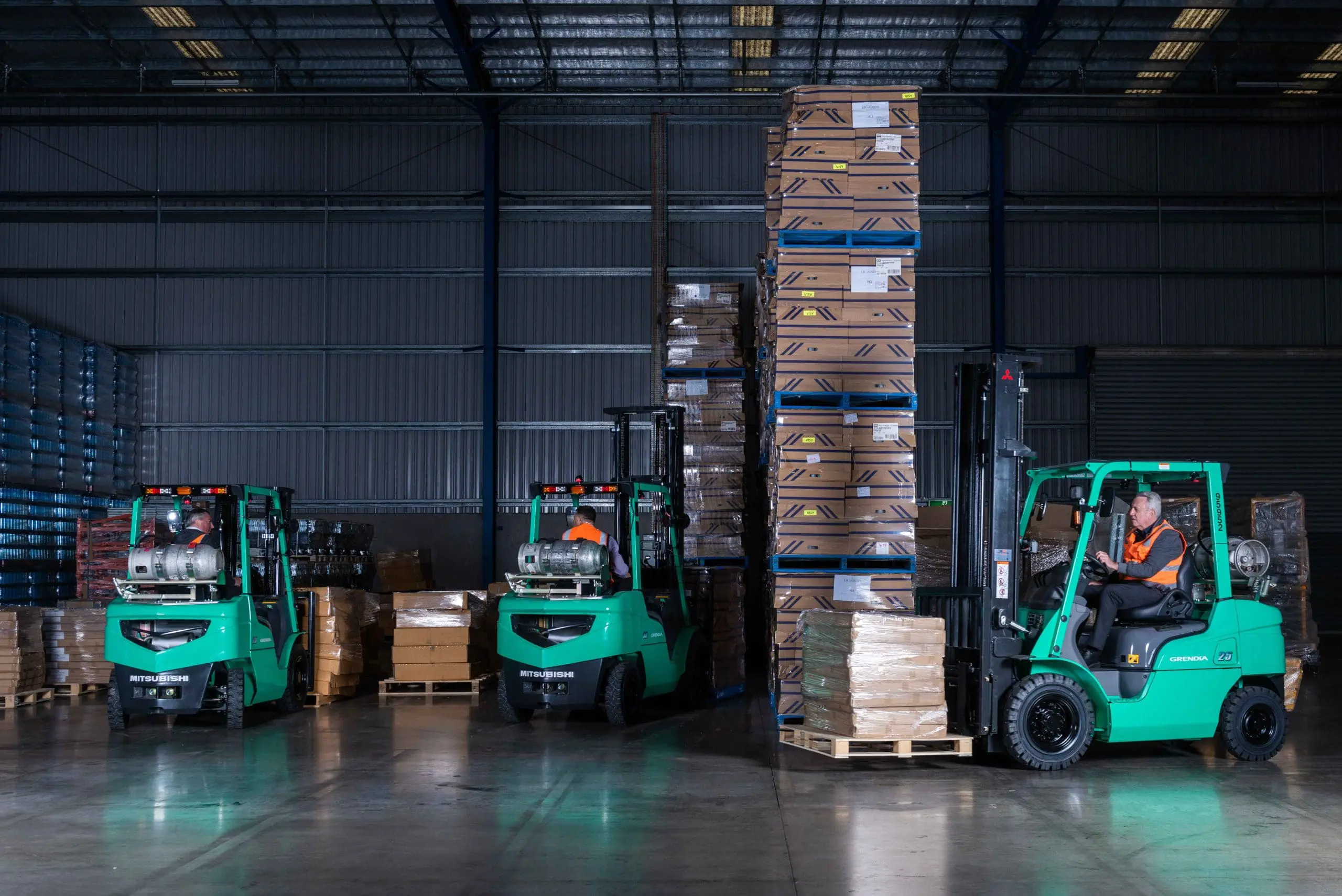
Warehouse receiving also depends on the condition of the complete handling unit.
The pallet or base needs to provide suitable support and fork entry. The goods above it need to remain contained while the forklift travels and changes direction.
A pallet may be structurally fit for use even if boxes, components, or packaged products on top can still move independently. Wrapping, strapping, suitable restraints or another load-specific method may be needed to keep those goods together during handling.
This distinction matters because forklift selection cannot compensate for poorly contained goods.
Travel from receiving to storage may include braking, turning and raising the load. If the goods can shift during those movements, their position relative to the forks can change as well.
For familiar palletised stock already prepared correctly for transport, the hire can stay centred on the load weight, lift and warehouse task. Goods that have shifted in transit, loose products or an unusual carrier deserve attention before forklift movement begins.
Yes, but the load should be made ready for forklift handling before loaded work starts.
If packaging has failed, goods have shifted, or the carrier no longer provides stable support, the first step is to establish a secure handling unit. Once the load is ready, its weight, dimensions and required lift can be used to discuss an appropriate forklift.
Where a purpose-built frame, stillage or attachment is involved, its intended fork-entry and support arrangement should also be understood before the machine is selected.


Consider a Gateshead business receiving packaged stock that needs to be unloaded, carried through the warehouse and placed into storage.
The forklift has to manage the vehicle-side lift, the travel path and the final placement. If the highest storage position places a greater demand on the machine than the unload, that later lift should influence the hire choice.
Another customer may only need equipment to remove a machine from a delivery vehicle and set it onto prepared ground. That job can be scoped around a much shorter handling sequence.
MLA can discuss the rental around whichever of those situations applies.
The same approach works for workshop equipment, project materials and temporary stock movements. The machine should cover the lifts the customer expects to perform without adding unnecessary size or features that make the site harder to work in.
Where several types of load are involved, the booking should account for the movements that place the greatest demand on the forklift rather than assuming every item behaves like the easiest pallet in the group.
Forklift safety for this Gateshead scenario begins with two conditions working together: equipment suited to the lift and a load ready to be carried.
Loose packages should be secured using a method appropriate to the goods and their carrier. Damaged packaging or a load that has shifted during transport may need to be corrected before the forklift picks it up. Specialist bases, frames or stillages should be handled through their intended support points.
Once the handling unit is stable, the operator can work within the forklift’s rated capacity and in accordance with the requirements that apply to the site.
For a Gateshead business planning an unload-and-put-away job, the most helpful preparation is straightforward: know the loaded weight where possible, identify the highest placement the forklift must reach, and ensure the goods are secure on the carrier before the first lift.










