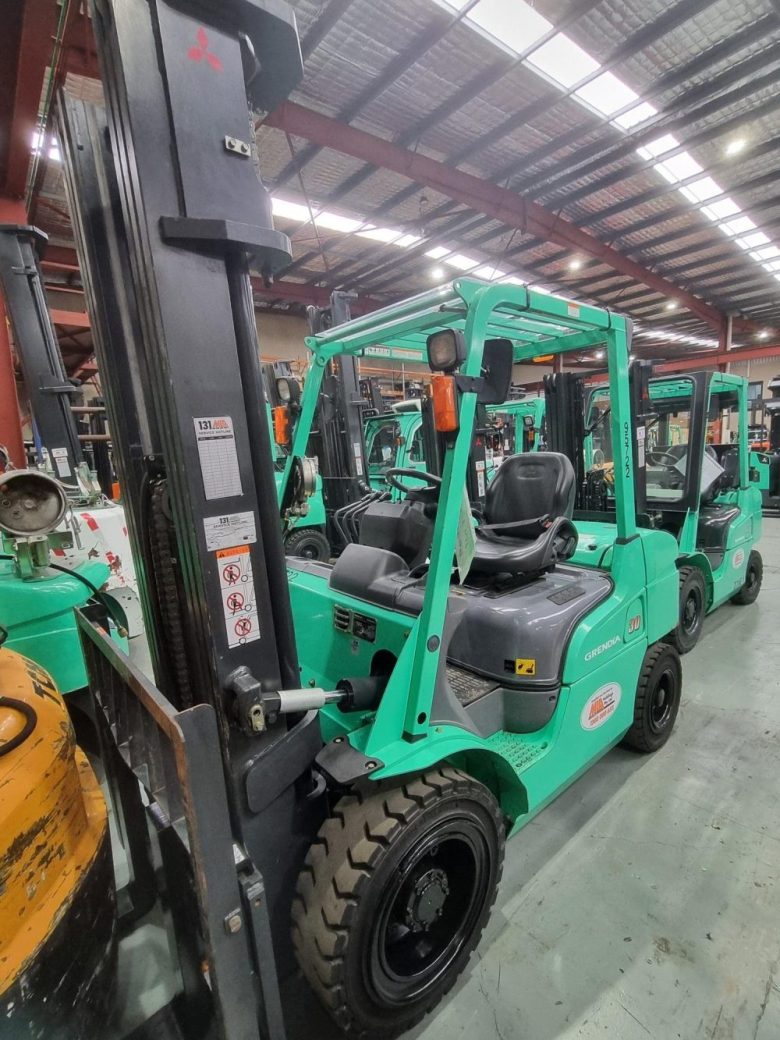
Forklift work around Katanning can turn up in very different places. A local workshop may be receiving machinery, a building project may have palletised materials arriving, or a rural property may need mechanical handling while supplies and equipment are being moved. Commercial customers can have more regular requirements, while another customer may only need a forklift during one active stage of a job.
The equipment should follow that task. Forklift hire and rental in Katanning through MLA Complete Forklift Solutions can be discussed around the load, the work area and what needs to happen after the forks pick it up. That keeps a straightforward unload simple while leaving room for heavier equipment, repeated handling or rural work that brings additional site considerations.
Being on a farm does not by itself determine the forklift. Neither does operating a workshop or running a local business.
A stable pallet on a prepared surface may create a familiar counterbalance-forklift job. Machinery with greater mass or an unusual support arrangement could require a different capacity or handling setup. Materials that need to be raised into storage introduce lift height. Work taking place outside needs the actual operating surface considered before a machine is selected.
The same customer may have more than one of those situations during a project. If the loads are genuinely similar, they may sit comfortably within the same hire. A substantially heavier or differently presented item deserves separate consideration before it joins the workload.
MLA’s Bunbury forklift hire operation provides the South West hire pathway. For a Katanning enquiry, the most relevant information stays close to the real job rather than assuming a standard rural equipment package.

The Katanning Regional Sheep Saleyards on Katanning-Nyabing Road is an unmistakable part of the town’s agricultural role, with livestock and agribusiness activity drawing people, vehicles and equipment from across the surrounding region.
That movement between rural properties creates one consideration that may matter when a hired forklift genuinely travels from one farm or livestock property to another: equipment cleanliness can form part of the property’s biosecurity requirements.
Western Australian farm biosecurity guidance treats vehicles, machinery and equipment as potential pathways for weeds, pests and diseases. Individual properties can also have their own entry, cleaning or movement requirements.
For a forklift that stays at one workshop or one property throughout the hire, this may have little effect on the booking. Where the machine is intended to move between rural sites, the customer should establish the relevant property requirements before that transfer happens.
Soil, plant material, mud or manure left on equipment can be more than a presentation issue in a farming environment. Cleaning expectations may need to be factored into the movement between properties, particularly where the receiving farm has a defined biosecurity procedure.
The hire decision itself remains familiar. Capacity, lift height, load stability and operating conditions still determine whether the forklift suits the work. Property-to-property cleanliness is an additional site requirement where that particular operating pattern applies.
Potentially, provided the machine remains suitable for the lifting tasks, and the requirements of each site are addressed. Where farm biosecurity protocols apply, equipment movement and cleanliness should be planned around those property rules before the forklift transfers to the next location.
Many Katanning customers will never need to move the forklift between farms.
A rural property may have bags, building materials or workshop supplies arriving on pallets. A shed project could require unloading steel or packaged products. Machinery may need repositioning within a prepared work area. Those jobs should be assessed for what they actually involve, without adding agricultural complexity that does not affect them.
Reliable load weight gives the capacity discussion a firm basis. The way the load is supported tells the operator where the forks can engage it. If the work includes lifting above ground level, the required height also needs to be part of the equipment brief.
For machinery, supplier or manufacturer information may identify suitable support or handling points. For conventional pallet work, a sound pallet and stable unit load may already provide the required interface.
The operating area then completes the picture. A prepared shed apron or workshop floor can present very different conditions from another part of a rural property. The hired forklift only needs to be specified for the places where it is actually expected to work.


Some material-handling requirements continue across a busy stage instead of ending after the first delivery. Incoming supplies, workshop work or a rural project may create repeated forklift movements while that stage remains active.
Keeping suitable equipment available across that period can make sense when the workload supports it. The important point is that the original forklift specification should continue to fit the loads being handled.
If the work changes materially, reassess the changed task. A booking arranged around palletised supplies should receive another look before a much heavier machinery component is added. Likewise, moving the forklift to a second property may introduce different ground conditions or site requirements even if the load remains similar.
A forklift used to unload supplies at one property and the same machine transferred between several farms may look like the same hire on paper. The work around it is different.
For Katanning customers, recognising those differences early keeps the equipment matched to the lifting job while allowing genuinely rural considerations, including property biosecurity, to be handled where they belong.
Preparation depends on the job, so a Katanning customer rarely needs an enormous checklist.
For pallet work, confirm that the load is stable and its weight is suitable for the hired machine. For machinery, identify how it is designed to be supported. Where the forklift will work around people, livestock movements, vehicles or other active operations, give the lifting area enough separation for the task to proceed safely.
The operator should hold the appropriate authorisation and be familiar with the actual hired forklift before loaded work begins. MLA also maintains broader forklift safety information for customers reviewing operator and workplace considerations.
If the forklift will later travel to another farm, add the receiving property’s biosecurity requirements to that preparation before the transfer.
Usually it changes how equipment is managed between properties rather than replacing the normal equipment-selection factors. The forklift still has to suit the load, lift and work area. Cleaning or entry requirements become an additional consideration where the machine is crossing between rural sites.
Yes. Suitable forklift hire can support workshop deliveries, construction and property work, local commercial handling, machinery movements and other jobs where mechanical lifting is appropriate. The customer’s actual load and operating environment determine the equipment, regardless of whether the work is connected with Katanning’s agricultural sector.