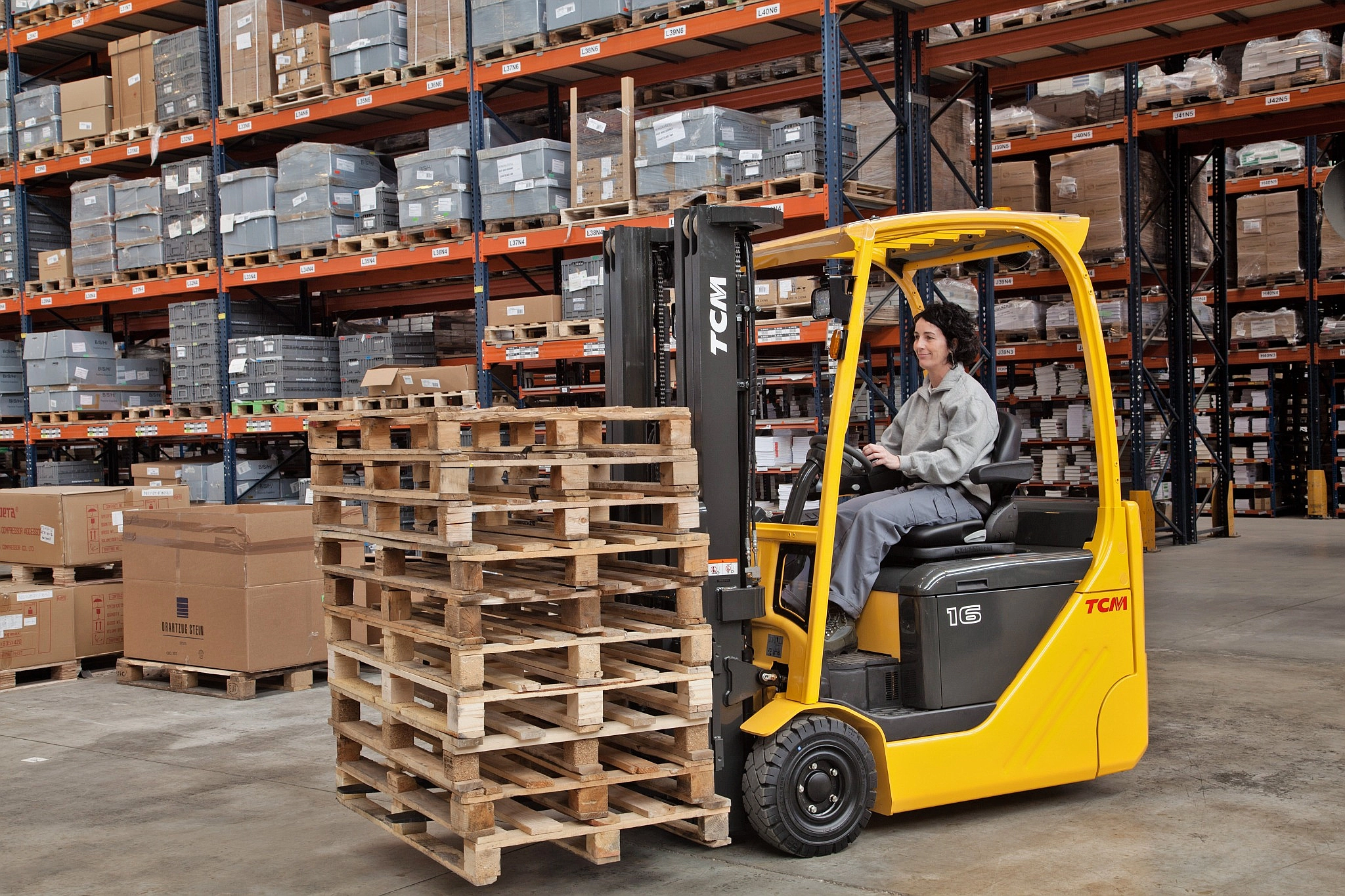
Some forklift hires are decided before the first load is lifted. If the machine needs to drive into a semi-trailer, the trailer becomes part of the surface carrying the forklift, the operator and the load.
That has clear relevance in Kooragang. The Port of Newcastle’s Kooragang 2 and 3 operate as common-user bulk berths within an area where road freight and cargo transfers are part of the surrounding industrial environment. A business elsewhere on Kooragang may face a much smaller version of the same basic question when a delivery arrives: will the forklift work beside the vehicle, or does it need to enter the trailer?
A contractor unloading materials onto hardstand may only need the forklift outside the vehicle. Another customer may need to retrieve loads from farther inside a trailer before moving them into a storage or work area. Those two jobs can require different preparation, even when the loads themselves look similar.
MLA Complete Forklift Solutions provides forklift hire and rental for these kinds of handling requirements. The discussion can cover the load, movement, and conditions the hired machine will encounter, rather than treating the trailer as an incidental part of the job.
An uncoupled semi-trailer can react differently once a forklift drives onto it.
The forklift introduces its own mass as well as the load it is carrying. As the machine moves through the trailer, that weight shifts across the trailer structure. Where the trailer is no longer supported by a prime mover, appropriate support may be required to prevent movement or upending during loading or unloading.
That consideration sits outside the forklift’s capacity rating. Choosing a machine with enough lifting capacity does not resolve the condition of the platform it will drive onto.
For a Kooragang customer, this means the hire brief should distinguish between a forklift that stays on the ground and one expected to travel inside a trailer. If trailer entry is part of the work, the loading arrangement needs to be suitable for that movement before the hired forklift is used there.
The point is narrow but important. It does not turn every truck unload into a complex project. It simply separates two different operating situations that can otherwise be described as the same job.
Plenty of Kooragang hire requirements never involve driving into a trailer.
A business may need a forklift to receive palletised goods from the side of a vehicle, move equipment across an industrial site or support a concentrated period of handling while another machine is committed elsewhere. The equipment decision then follows the work the forklift will perform upon arrival.
Load mass remains one part of the discussion. Lift height, the way the load is supported and the surface the forklift will travel over may also affect suitability. Where the work remains at ground level with familiar palletised goods, the hire can usually be scoped without introducing features the job does not require.
Customers can discuss suitable equipment through MLA’s Newcastle forklift hire and rental service. The aim is to match the forklift to the movements involved, whether the booking covers a delivery, a workshop task or additional handling capacity at an industrial site.
Broad hire remains relevant throughout Kooragang. The port and freight environment provides a strong local context, but customers do not need to handle bulk cargo or work on a wharf to arrange a forklift.


This is one of the most useful distinctions to establish early in a truck-unloading job.
If loads can be reached safely from ground level, the forklift may never need to enter the trailer. The machine can remain on the site’s established operating surface while the load is removed and transferred to its next position.
If the load sits deeper inside the trailer, the forklift may need to travel into it. That introduces the trailer floor, support arrangement and vehicle movement controls into the setup.
It can also affect equipment suitability. The hired forklift still needs to fit the movement it is expected to make and operate within the available loading arrangement. Those details are better resolved during the hiring process than discovered after the equipment arrives.
The customer does not need to design the forklift specification on their own. A clear description of how the load will be accessed gives MLA a much better basis for discussing the machine.
A Kooragang enquiry can begin with a straightforward description of the task.
For example, a customer might explain that several palletised deliveries need to be unloaded from ground level and moved into a nearby work area. Another might explain that the forklift will have to retrieve goods from within an uncoupled semi-trailer.
Those descriptions immediately separate two different operating requirements.
MLA can then discuss an appropriate forklift and rental arrangement around the work. Where the machine needs to enter a trailer, the site’s loading setup remains the customer’s responsibility and should be prepared for that use. Where the forklift remains outside, the discussion can stay centred on the load and the ground-level movements.
Once equipment is supplied, the operator and workplace must still meet the requirements applicable to the forklift and the task. At the end of the booking, the machine follows the agreed return or collection arrangement.
There is no benefit to making a short hire more complicated than the job demands require. The extra detail only earns its place when it changes how the forklift will be used.


A trailer that moves while a forklift is loading or unloading can create a serious change in the operating situation.
Vehicle brakes, suitable restraint, and trailer support all form part of the loading environment in which they apply. An uncoupled semi-trailer may also require suitable fixed support before a forklift enters, so the trailer remains stable under varying loads.
These controls are separate from operator familiarisation and the forklift’s normal pre-use requirements. They address the platform and vehicle that the forklift interacts with.
For customers arranging equipment through MLA, the practical question is therefore simple: where will the forklift be when it picks up the load?
If the answer is “inside the trailer”, include that in the hire conversation.
If the forklift will work entirely from the site’s ground surface, the booking can be shaped around that movement instead.
Kooragang’s freight environment makes truck-and-trailer interfaces locally relevant, but the same MLA hire service can support much smaller handling tasks across the area.
If your next job involves unloading a vehicle, explain whether the hired forklift will remain outside or needs to enter the trailer. That one distinction can change the site preparation required before the first lift.
For other work, describe what needs to move and how the forklift will be used on site.
Contact MLA Complete Forklift Solutions to discuss forklift hire or rental for upcoming work in Kooragang.