

Warehousing around Distribution Street gives Larapinta a very practical mix of forklift work. One customer may need a truck unloaded, another may be shifting machinery or general freight, while a warehouse operator could be placing palletised stock into high-bay storage. MLA Complete Forklift Solutions supports suitable forklift hire and rental for those everyday requirements, with the equipment selected around the load, lift height, available space and operating conditions.
High-density storage introduces an extra question that is easy to miss during an enquiry. A pallet can sit comfortably within the forklift’s lifting capacity and still be a poor fit for the rack position waiting for it. Cartons may overhang the pallet, packaging may extend beyond the normal footprint, or the pallet itself may be larger than the storage bay was designed to accept. In Larapinta, where substantial warehousing and distribution activity includes facilities around Distribution Street, those dimensions can matter before the truck ever approaches the rack.
Forklift capacity answers an important question: can the truck safely lift the load under the relevant operating conditions? It does not answer whether the complete palletised unit will fit into the intended storage location.
The useful measurement is the full load envelope. That means considering the pallet together with everything sitting on it, including any cartons, bags, wrapped goods or components that extend beyond the pallet edges. A nominal pallet size can therefore give an incomplete picture if the product itself projects further.
Overhang can create several practical problems. Stock may intrude into the neighbouring pallet position, reduce the clearance available around rack uprights or make placement more difficult than the pallet dimensions suggest. A larger-than-expected footprint can also affect how precisely the load needs to be positioned during both put-away and retrieval.
The same principle applies vertically. Required lift height must be based on the intended storage position, but enough usable clearance also needs to remain around the load itself. A high-capacity forklift does not solve a rack-fit problem created by an oversized handling unit.

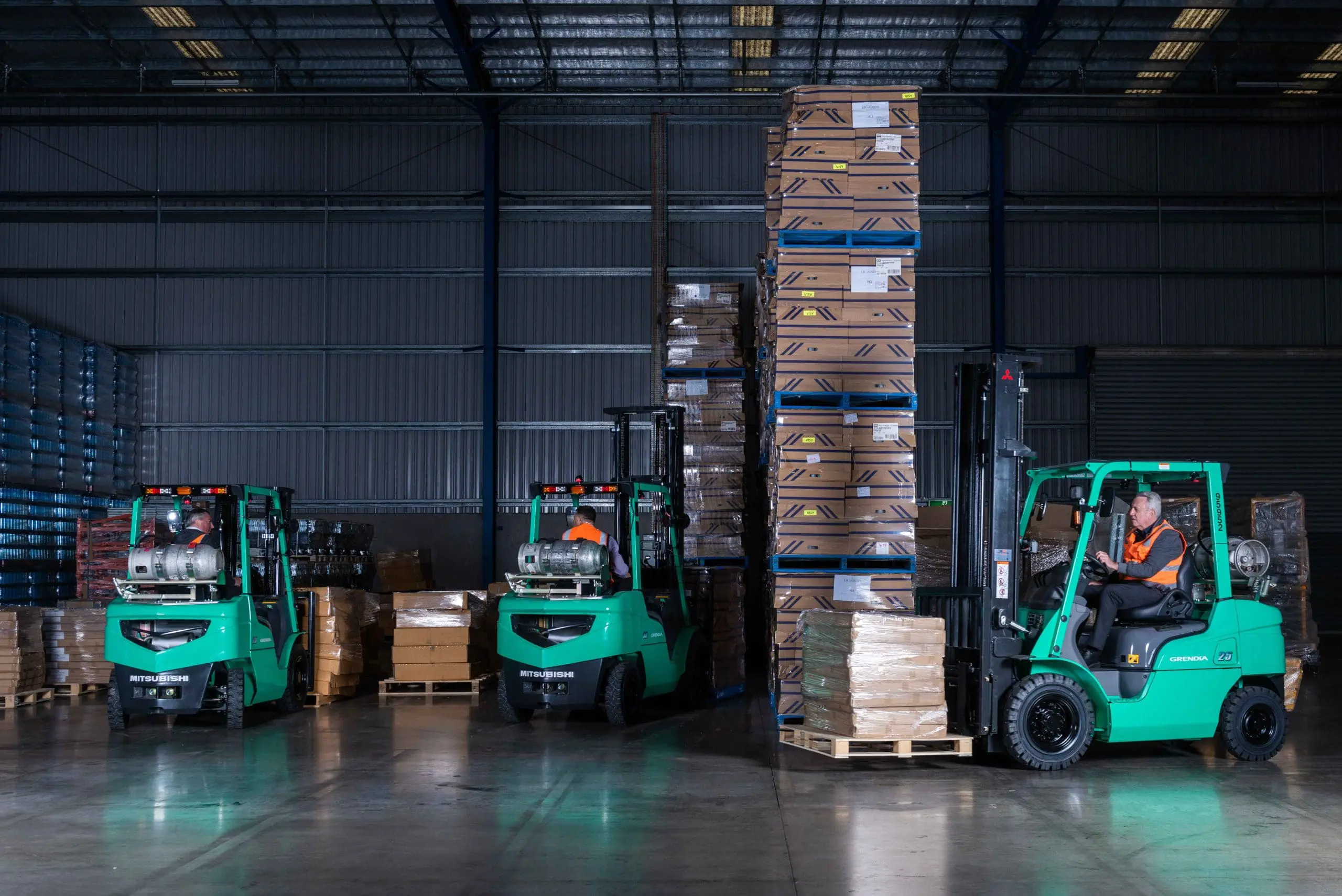
MLA’s forklift hire options become easier to narrow once the complete load dimensions and required storage position are known. The truck can then be considered alongside the actual warehouse task rather than selected from pallet weight alone.
A common customer question is: Can a pallet be within the forklift’s capacity and still be unsuitable for the rack?
Yes. Forklift capacity relates to the truck’s ability to lift the load safely in the relevant configuration. Rack suitability depends on a different set of factors, including pallet dimensions, product overhang, available clearances and the design of the storage position. Both need to work together.
This distinction is particularly useful where stock arrives from different suppliers. Two pallets may weigh almost the same while presenting very different dimensions once wrapping, cartons or irregular products are included.
A Larapinta customer does not need a high-bay racking problem to use MLA.
General warehouse pallets, machinery deliveries, packaged equipment, incoming freight and suitable one-off lifting jobs can all be assessed on their own requirements. The local racking issue simply adds another layer where the load is ultimately being stored above floor level.
A ground-level unloading job may be resolved through load weight, fork suitability, truck access and operating surface. Moving stock through a warehouse can introduce manoeuvrability and travel-distance considerations. Placing goods into racking brings lift height and the full load envelope into the same discussion.
Those variations are why an enquiry should describe the job instead of trying to name the forklift in advance. A customer who knows the approximate weight, dimensions, pick-up point and final destination already provides enough information to begin narrowing the options.


Rental duration should also reflect the actual work. A defined incoming freight task may have a very different commercial requirement from recurring warehouse activity, but there is no need to force every Larapinta enquiry through a complete list of rental periods.
Safety follows the same job-specific approach. Loads need stable support, operators need the appropriate authorisation, and rack placement needs enough clearance for the stored handling unit. Where a pallet or its contents extend beyond the expected footprint, that condition should be understood before lifting begins rather than discovered at height.
The most useful Larapinta hire brief describes more than the pallet’s nominal size.
Overall width, depth and height help establish the real storage envelope. Approximate weight remains necessary for capacity selection, while the intended rack level helps narrow lift-height requirements. If the product projects beyond the pallet, that should be included in the description as well.
Photos can also help where the load is unusually shaped, or the amount of overhang is difficult to explain. They are not mandatory for every enquiry, but they can make a complex handling unit much easier to understand before equipment is selected.
Where an owned forklift is already being used in racking and develops a genuine mechanical issue, service support should address the equipment condition itself. Any parts requirement should come from what the inspection identifies. That remains separate from deciding whether a particular pallet fits the rack.
MLA Complete Forklift Solutions can then match suitable forklift hire and rental in Larapinta to the job actually being planned, whether that involves straightforward freight handling or repeated warehouse storage.
Customers can provide the load and site details through MLA’s contact page. For racking work, including the complete palletised dimensions from the outset helps avoid discovering at the final storage position that the load is wider, deeper or taller than the available space.










