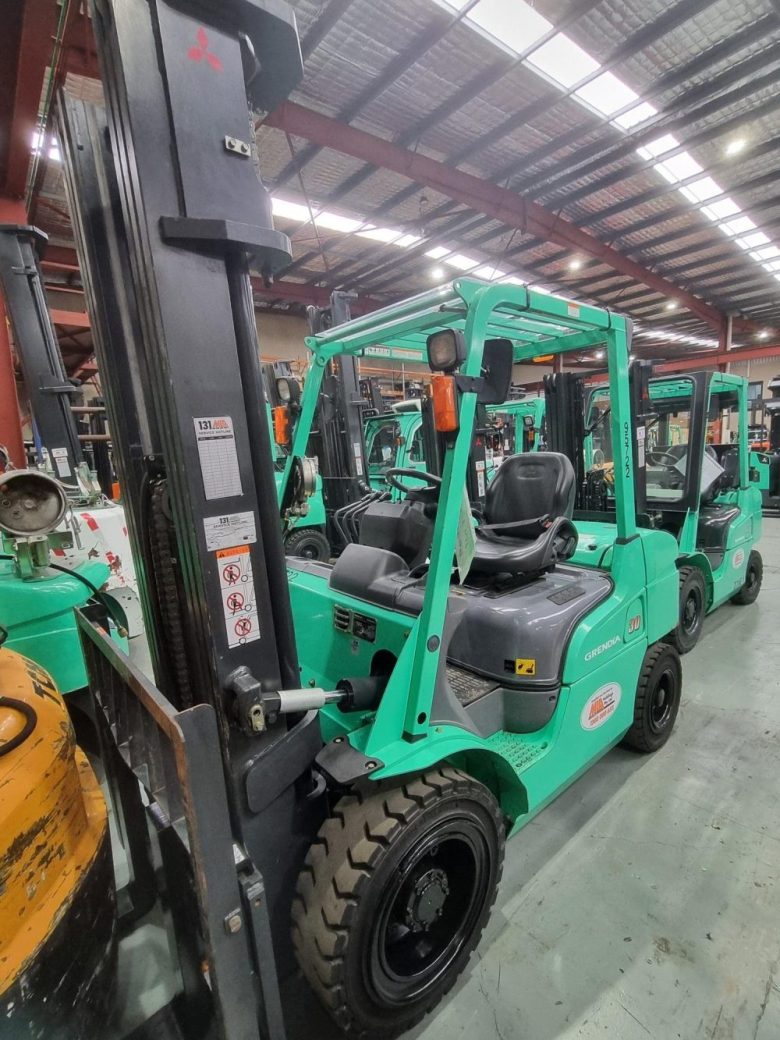
The service reminder has been moved again because the forklift is still needed. Receiving depends on it when stock arrives; warehouse staff need it for put-away and replenishment, and dispatch cannot release it while outgoing loads are still being prepared. Planned maintenance remains important, but there never appears to be a convenient time to take the machine out of operation.
Laverton North forms part of Melbourne’s major western manufacturing, freight and logistics area. For businesses whose handling equipment is closely tied to transport or production activity, postponing service can feel easier than explaining how the work will continue without the forklift.
A planned MLA service booking can be paired with temporary rental where the site still needs handling capacity. The rental is selected for the work that must continue, while the normal machine is made available for inspection, maintenance or repair. Forklift hire and rent in Laverton North also remains available for deliveries, machinery movements, warehouse projects, seasonal demand and longer operating requirements.
A forklift may be used throughout the day without performing the same task continuously.
It may unload incoming pallets, move materials to storage, support production and return later for dispatch. Releasing the machine therefore affects several parts of the operation, even if the service itself only relates to one piece of equipment.
The problem becomes harder when the business waits for a completely quiet day. In a busy Laverton North operation, that day may never arrive.
A more practical approach is to identify:
This turns the service booking into a continuity decision rather than another task competing with the freight schedule.
Temporary rental can reduce the pressure to postpone maintenance.
The rental may support receiving while the normal forklift is serviced. It may remain with production materials, warehouse movement or dispatch, depending on where the operational risk is highest.
The temporary machine does not need to be chosen only by copying the existing model. Its suitability should follow the work scheduled during the service period.
That may include:
A short overlap can also give the business time to introduce the rental before the normal machine is released. Operators can understand where it will work, which tasks it will cover and how it fits the site’s existing traffic controls.
The Melbourne forklift service and repair team can review the operating concern together with the period the machine can realistically be made available.
A planned booking should reflect what the forklift is actually doing, not only the date shown on the maintenance schedule.
If the machine has developed a recurring warning, steering concern, lifting issue, tyre problem, charging fault or change in performance, that information should be raised before the service period begins.
The timing of the symptom can also matter. A problem that appears under load may affect different work from one that occurs after extended travel or later in the operating day.
Clear information helps distinguish between:
For a parts enquiry, the equipment identification and a clear description of the visible or operating issue provide a useful starting point. Photographs may add context where a component or warning is visible, but they should not be treated as a diagnosis.
If further work is identified, the rental period can be reviewed against the updated service requirement rather than ending automatically while the normal forklift is still unavailable.


The temporary machine should enter a clear operating arrangement.
Staff need to know which forklift is available, what work it is intended to cover and when the normal machine is expected to return. The rental should follow the same authorised-user, reporting and traffic-control expectations as the rest of the fleet.
The process should not become complicated. A useful handover confirms:
When the serviced forklift returns, the business should confirm whether it is ready for normal use, whether any restriction remains and when the temporary equipment is no longer required.
This avoids uncertainty without turning the service period into a separate operating system.
Not every Laverton North hire requirement begins with servicing.
A business may need a forklift for one delivery, machinery placement, stock movement or warehouse rearrangement. Project rental may support work over several days or weeks, while longer arrangements can provide additional capacity for recurring handling demand.
The useful distinction is whether the requirement comes from:
That reason shapes the discussion of equipment and the practical rental period.


Call 1300 166 660 with the forklift details, operating concern, and the period during which the machine can be released. Explain which freight, warehouse or production work still needs cover during that time.
Current Victorian branch information is available through MLA’s branch network. The objective is to plan servicing before the machine becomes unavailable unexpectedly, while keeping the necessary handling work moving.
Identify the work that cannot stop, then determine when the machine can be accessed and whether temporary rental is needed for the remaining tasks.
Yes. A short overlap may allow the temporary machine to be introduced and assigned before the service booking begins.
Not necessarily. It should suit the loads, lift height, route, surface and operating period it will cover during the service window.
The temporary hire period can be reviewed against the updated repair or parts requirement so handling support does not end prematurely.
Yes. Hire may support deliveries, machinery movements, warehouse tasks, temporary additional capacity, project work or a longer rental requirement.