

Mayfield customers may need forklift hire for a variety of reasons. One business may be unloading palletised stock, another may be moving machinery through a workshop, and a contractor may need temporary lifting capacity while project materials arrive on site.
MLA Complete Forklift Solutions provides forklift hire and rental across Newcastle for these kinds of jobs. Equipment selection can be based on the load, lift height, operating space, and handling method, rather than assuming that one forklift class suits every movement.
Mayfield also has a distinctive freight context. The Port of Newcastle’s Mayfield cargo facilities accommodate breakbulk, project, general and containerised cargo. That makes loads such as fabricated steel, machinery and other project freight a credible part of the local handling environment without making them the only reason someone may need a forklift here.
For some of those loads, weight and dimensions are only part of the decision. The material touching the forks can matter as well.
A steel load resting directly on steel fork arms can have a different grip characteristic from a load supported on timber packaging, a pallet or another compatible handling base.
The issue is especially relevant where smooth steel surfaces meet. The load may have sufficient support beneath it, and the forklift may have sufficient rated capacity, yet contact between the load and the forks can still allow unwanted movement if the handling arrangement does not provide adequate security.
This creates a different forklift question from simply asking whether the machine can lift the stated weight.
For a Mayfield customer receiving fabricated steel or project cargo, MLA needs to understand how the item will be presented for lifting. A steel assembly mounted on a transport frame may create a single handling interface. A loose steel component resting directly on the forks creates another.
The forklift selection and any compatible load-handling arrangement should reflect that difference before the movement begins.
A load’s underside can be easy to overlook because most hire enquiries naturally begin with weight.
Weight remains important, but the way the forks support and retain the item affects how the load behaves once the machine begins to lift, travel and turn.
Consider three Mayfield jobs.
A warehouse receiving palletised consumables may already have a stable, familiar fork-entry arrangement. A workshop unloading a crated machine may have clearly defined support points under the transport base. A fabricated steel item may arrive without the same friction or containment between the load and the fork arms.
The forklift requirement should follow those differences.
Where a purpose-built handling base, pallet, stillage, or approved attachment is part of the load arrangement, its compatibility with the forklift must also be considered. The goal is to keep the item supported and secure through the movements the hired machine will perform.
This is more useful than simply moving to a larger-capacity forklift. Extra capacity does not address a load that can slide relative to its support.
A Mayfield forklift may only be needed to remove freight from a vehicle and place it on a prepared site area. Another booking may involve moving the same load farther through a workshop or industrial property before positioning it for the next stage of work.
Those movements can change what matters.
A low-level unload may put most of the emphasis on capacity and load security. Travelling farther through a site introduces manoeuvring space and surface conditions. Placing a load at height brings the forklift’s rated capacity at that lift into the discussion.
MLA can address those conditions as part of the hiring enquiry.
The customer does not need to begin by naming a forklift model. Describing what is being moved and how the movement is expected to happen gives MLA a stronger basis for discussing a suitable rental option.
For a familiar pallet movement, that discussion may remain brief. For a steel fabrication or project load, the contact arrangement between the forks and the item may deserve closer attention.

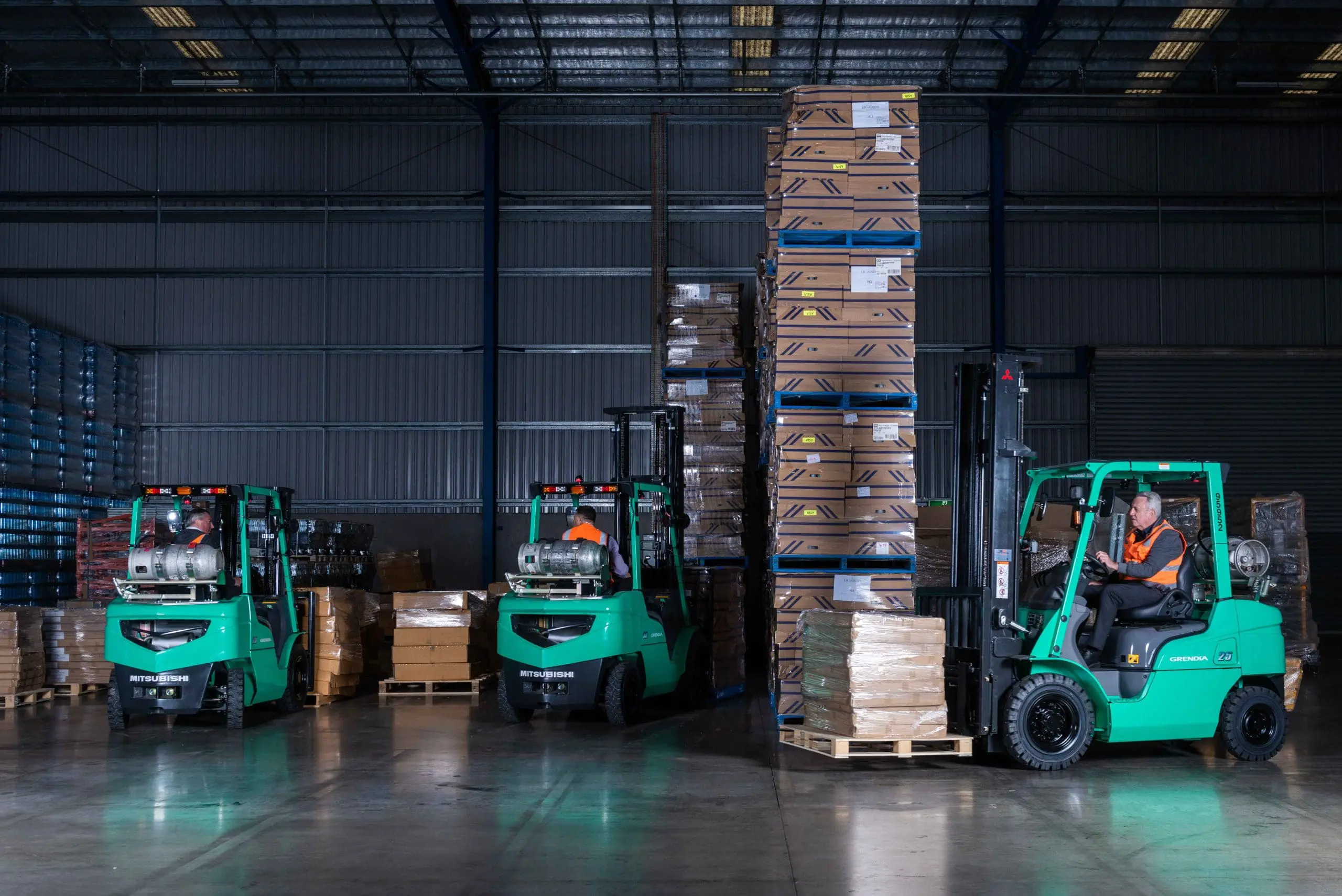
Forklift hire can also help when the amount of work changes temporarily.
A workshop may have several deliveries arriving while its regular equipment is occupied elsewhere. A contractor may only need lifting support during a specific part of a project. A business may need another machine while stock, machinery or materials are being rearranged.
The commercial arrangement should align with the work to be covered.
MLA can discuss forklift rental based on the expected handling requirements without turning every booking into a long-duration commitment or an equipment-purchasing decision. The relevant machine still comes back to the loads and movements involved.
Where the workload includes several different items, the demanding movement should be considered alongside the more familiar ones so the hired forklift can cover the work it is expected to perform.
A load that is stable at rest must remain controlled once the forklift moves.
Acceleration, braking, changes in direction and surface irregularities can all affect the load relative to the forks. For smooth steel components, maintaining a secure handling arrangement is therefore part of the lifting decision rather than something to consider only after the load has been raised.
The forklift should also be operated within the rated configuration that applies to the machine and any attachment being used.
If a load requires a different handling interface, that requirement should be resolved before the lift rather than improvised on site.
This keeps the safety discussion specific to the Mayfield job. There is no need to attach an unrelated catalogue of forklift controls to a straightforward hire enquiry.


Some Mayfield businesses will combine hired equipment with their own forklifts.
If an owned forklift, attachment or fork assembly shows damage or wear that could affect the planned handling task, MLA’s service support can assess the equipment before it is relied on for loaded work. Parts requirements should follow the machine and component identification established during that process.
That service and parts support remains separate from the choice of the hired forklift. The rental machine should be selected for the job it needs to perform, while owned equipment is assessed on its own condition.
A palletised delivery, a crated machine and a fabricated steel component may all require forklift handling in Mayfield, but they do not present the same interface to the forks.
For steel or project cargo, include how the load will be supported in the hire discussion. If the item rests directly against steel fork arms, that contact condition may influence the handling arrangement even when the load weight is already known.
For other jobs, the conversation can stay centred on the movement, lift height and operating area.
Contact MLA Complete Forklift Solutions to discuss forklift hire or rental for work in Mayfield.










