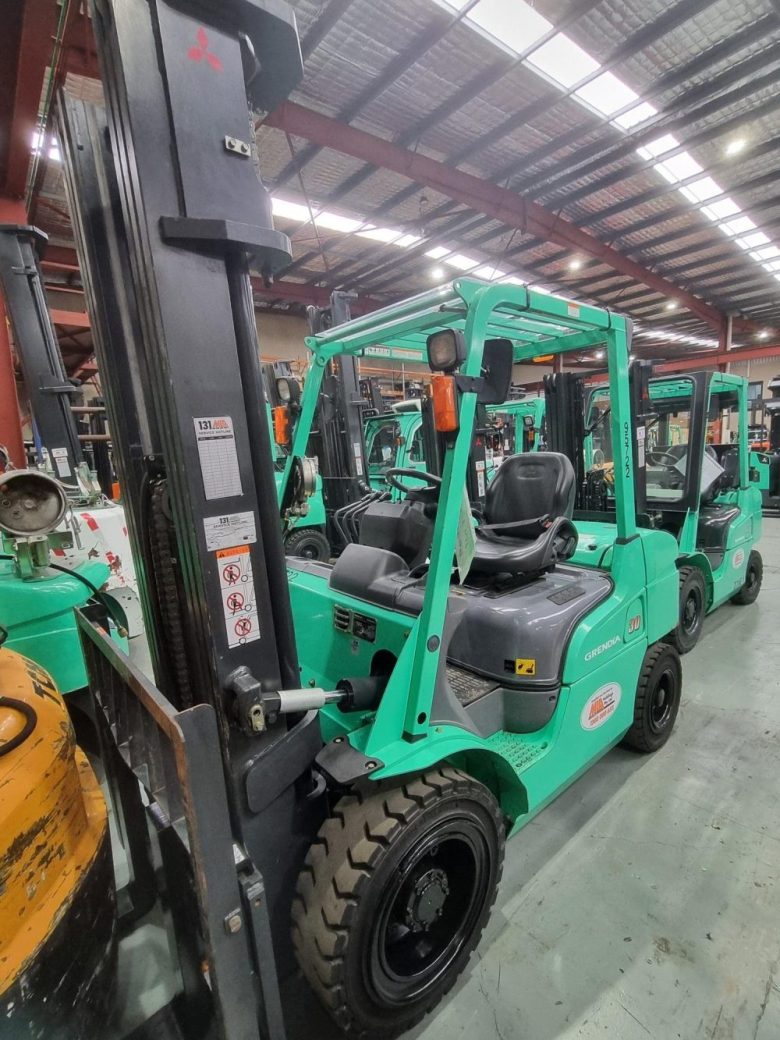
A centre manager may need shared display equipment brought out of storage, while a Mermaid Waters resident receives palletised landscaping materials or a contractor unloads one substantial machine nearby. Each customer can hire or rent a forklift for a suitable temporary job. The centre-wide scenario is distinctive because no individual retailer owns the load, yet somebody still has to organise its movement, storage and later return.
Mermaid Waters includes a major mixed-use retail centre with dozens of retailers and dining businesses, as well as recurring seasonal or community activities. That creates occasional handling work involving property-wide assets rather than the normal inventory of one shop.
The items might include:
A supermarket may have equipment for its normal stock movements, but that does not automatically solve a short property-wide project. The machine may be committed elsewhere, be unsuitable for the asset, or be unavailable to the contractor responsible for the change.
Temporary forklift hire gives the centre or project team a defined way to move those shared items without turning an occasional campaign into a permanent equipment commitment.
Common-area equipment often follows a return journey.
It leaves storage, moves to a prepared service position and later returns after the promotion, maintenance job or seasonal period. The outgoing movement is only half the handling requirement.
That matters when rental is being planned. A short booking may suit one confirmed placement, with another method handling the return. A wider centre programme may need the forklift again when displays are dismantled, and shared assets are returned to storage. The useful hire period follows those genuine movements rather than the public promotion dates.
The storage position should also preserve the next lift. Components pushed tightly against a wall or stacked without access for a fork may be difficult to retrieve months later. Returnable frames and pallets should remain with the equipment when they provide the support required for movement.
A private customer may have a simpler version of the same problem. Palletised tiles, a crated appliance, or workshop equipment might need one-off unloading and placement, with no later collection planned. That remains a complete forklift hire job even though it has nothing to do with a retail centre.
A shared display may ultimately sit where customers can see it, but the forklift should not be treated as the automatic method for crossing an active public area.
The substantial movement can take place within a suitable service yard, loading area, storage zone or temporarily controlled work section. Contractors can then use an appropriate installation method for the final customer-facing position.
This separation protects normal property activity and gives the operator enough room to approach, lift and place the load. Shoppers, delivery personnel and unrelated contractors should not need to pass through the operating area.
Timing alone does not make an unsuitable route safe. The machine still needs adequate space, a practical surface and a destination that allows the forks to withdraw after placement.
Where a large planter, display frame or furniture item must be moved without a standard pallet, its support should be resolved before the forklift arrives. Improvised fork entry beneath a decorative base can damage the asset or leave its weight poorly supported.

Centre-wide fixtures can be awkward because they were designed to stand in place rather than travel repeatedly.
A large planter may carry much more weight when filled than when empty. Display frames can become unstable after decorative panels are attached. Outdoor furniture may have narrow bases, while packaged structures can extend beyond the pallet beneath them.
The hire decision should follow the asset’s condition as the forklift will carry it.
For a frame that remains packaged, the transport pallet and stated weight may provide enough information. An assembled or filled item may need its current dimensions, balance and support reviewed more closely. Removable sections should be secured or removed where they affect visibility or stability.
A counterbalance forklift may suit movement between a delivery vehicle, the service area, and the storage zone. Work that remains inside an appropriate building may point towards equipment from MLA’s warehouse forklift range.
A centre, contractor or facilities operator may already own a forklift that spends most of its time on ordinary stores or maintenance work.
The next centre-wide project may reveal a maintenance issue that was less disruptive during quieter periods. A hydraulic concern, damaged fork or attachment problem should be addressed before the machine is assigned to a heavy shared asset in a partially occupied property.
MLA’s Gold Coast forklift service and repair team can assist when servicing or repairs are required. Parts enquiries can follow from a specific machine or component requirement, while temporary rental can cover planned movement when the owned forklift is not ready.
Where shared-property handling becomes more frequent, continuing rental may be considered for work that genuinely repeats, including maintenance deliveries, storage movements, and recurring centre campaigns.


For centre-wide equipment, begin by determining whether the asset is coming out of storage, moving into position, or returning after the project. Include its current form rather than relying on the dimensions of packaging that has already been removed.
Call MLA Complete Forklift Solutions on 1300 166 660 or use the Contact Us page to request a hire or rental option for the Mermaid Waters job.
Yes. The person in control of the property or coordinating the project may begin the enquiry. They should confirm the private operating area, asset details and where the forklift portion of the movement will finish.
It can, where both movements are planned within the agreed rental arrangement, and the equipment remains suitable. The asset may need to be reconsidered if dismantling changes its dimensions, support or balance.
Not always, but it needs suitable support and a reliable lifting method. A frame, skid or purpose-prepared base may be required where the asset has no usable fork entry.
A tenant can enquire about a suitable stock delivery, fixture movement, machinery unload or temporary increase in handling demand. The centre-wide project does not prevent separate general hire for another job.
Yes. Suitable private-property jobs may include landscaping supplies, building materials, and the movement of crated equipment and machinery. The load and operating area determine the practical option.