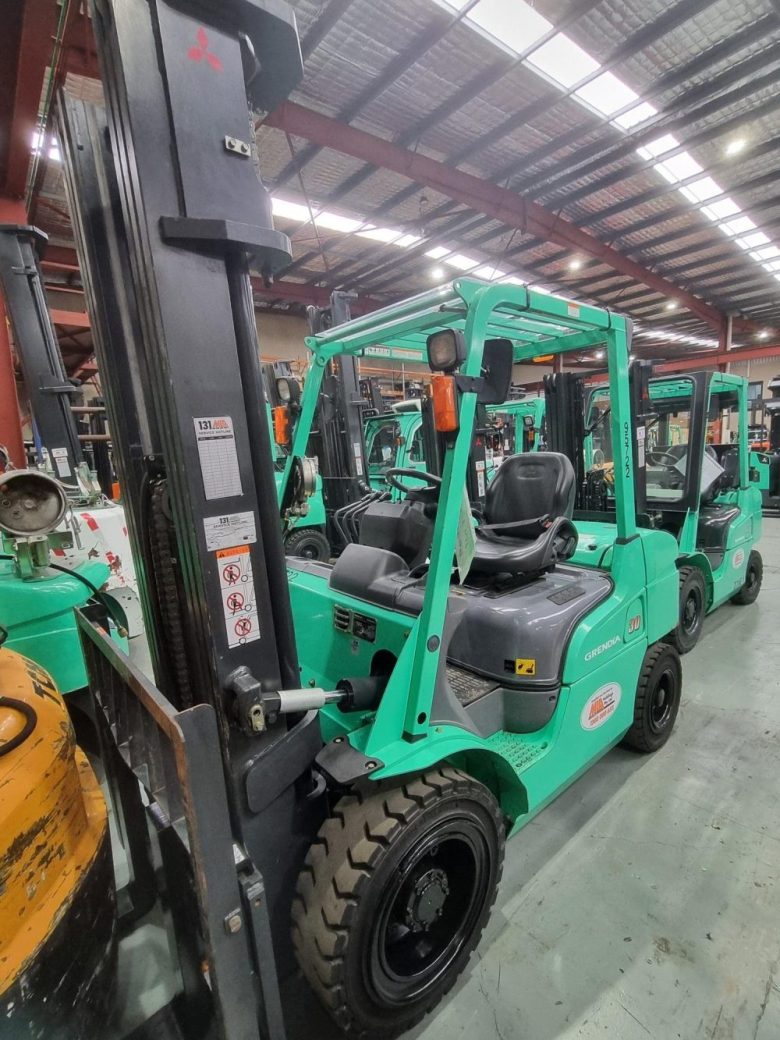
The contractor has packed its own equipment. Vehicles are leaving. The public area looks clear.
Shared venue assets may still be beside the wrong pavilion, stored materials may be blocking the next user and equipment intended to stay onsite can be mixed with items waiting for collection.
Customers can arrange forklift hire or rental in Mudgeeraba for this kind of venue reset and for ordinary jobs involving machinery, pallets, workshop stock, building materials or temporary project work.
Mudgeeraba Showgrounds is used by different events, clubs and private hirers across pavilions, outdoor grounds and supporting facilities. A forklift may be useful after an event when substantial items need to be returned to storage or moved into position for whoever uses the venue next.
The practical reset begins by separating what leaves the property, what belongs in the venue’s storage, and what must remain accessible.
A multi-use venue can contain several work zones.
One contractor may finish near a pavilion, while shared equipment needs to be returned across the property. Another item may belong near an outdoor area, a maintenance store, or a cattle facility. Internal roads and prepared access can connect those areas, but the forklift still needs a clear route and a suitable operating surface for the selected machine.
The venue coordinator should identify where powered handling is appropriate and where another method takes over.
A forklift may move a packaged frame between a collection point and storage. It should not automatically follow that item into a crowded pavilion, public area or space without suitable clearance.
People dismantling stalls, cleaning facilities or collecting smaller equipment should remain outside the active forklift route. Separating those tasks prevents several teams from trying to finish in the same area at once.
A venue asset may have been assembled for use rather than designed for repeated transport.
Large tables, barriers, display frames, and event structures may not have a standard pallet underneath them. Removable panels can affect balance, while decorative or functional attachments may extend beyond the supporting base.
Before lifting, confirm how the item will be supported in its current form.
A transport frame or retained pallet may provide clear fork entry. An assembled item could require a suitable skid, a purpose-prepared base, or a different handling method. Loose components should be removed or secured before the asset moves across the venue.
The heaviest item is important, but so is the item with the most difficult support. A lighter frame with poor access to the fork can require more preparation than a heavier load sitting securely on a known pallet.
A counterbalance forklift may suit suitable outdoor and loading movements. Equipment from MLA’s warehouse forklift range may be more appropriate where the work remains inside a suitable storage building.
Event equipment can appear to be a single outgoing group when the forklift first approaches it. Treating everything that way creates problems for the venue team later.
Temporary structures, hired stillages, packaged displays and contractor equipment may be ready for collection.
These items should be grouped near an appropriate loading position without blocking access needed by the venue. The collection vehicle and load order matter, particularly where larger frames must be loaded before smaller pallets or loose components.
Shared barriers, furniture, display structures, maintenance equipment, and reusable event items may need to be returned to a shed, pavilion store, or another established storage area.
The storage position should preserve access to the usable fork for the next booking. Pushing a heavy frame tightly against a wall may clear today’s work area while making the next retrieval much harder.
Some equipment may stay near the active venue area because another club, hirer or contractor needs it soon.
Those items should be clearly separated from outgoing freight. The next user should not arrive to find required equipment buried behind pallets waiting for collection.
A forklift supports the reset when each load finishes in the correct group, not simply when the main event area appears empty.

Mudgeeraba forklift hire is not limited to showgrounds, events or clubs.
A workshop may receive a machine in a crate. A property owner could have palletised landscaping or building materials arriving. A local business may need temporary stock movement, while a contractor may require equipment for a single installation or relocation task.
These jobs can remain small and specific. The customer only needs to explain what is moving and where the forklift will operate.
A larger commercial or industrial requirement may continue for longer when receiving, storage, or dispatch work is repeated. Current options can be discussed through MLA’s Gold Coast forklift hire service.
Venue equipment may sit unused between events. A forklift owned by a club, facility or contractor can do the same.
The next busy date should not be the first time a warning light, a hydraulic concern, or a damaged fork is noticed. Equipment expected to support setup or pack-down should be checked before contractors and delivery vehicles rely on it.
Servicing and repairs can address the machine’s condition, while an identified component requirement can be directed through MLA’s Gold Coast forklift parts service.
Temporary rental may be useful when a planned venue movement must continue while the regular forklift is unavailable. The hired machine should suit the actual reset or loading task rather than being selected only because it resembles the owned equipment.


The most useful starting point is the handover from the outgoing user to the next user.
Explain which substantial items are leaving, which belong in storage and which must remain accessible. For an unrelated Mudgeeraba job, simply describe the load and the private area where it needs to move.
Call MLA Complete Forklift Solutions on 1300 166 660 or send the enquiry through the Contact Us page.
Separate the two groups before loading begins. Contractor items should be prepared for collection, while venue assets should have confirmed storage or next-use positions.
Yes, where the venue controller has approved the position and the items do not block access, storage or other activities. They should remain clearly separated from outgoing loads.
Its base, weight, and available support need to be considered before moving the forklift. A skid, frame or suitably prepared support may be required.
Either may begin the enquiry. The venue controller should confirm where the forklift can operate, while the organiser or contractor identifies the loads and required movements.
Possibly, where the selected machine suits the route, surface, clearance and load. The full movement should be discussed rather than assuming that equipment suitable for outdoor use can also enter every building.