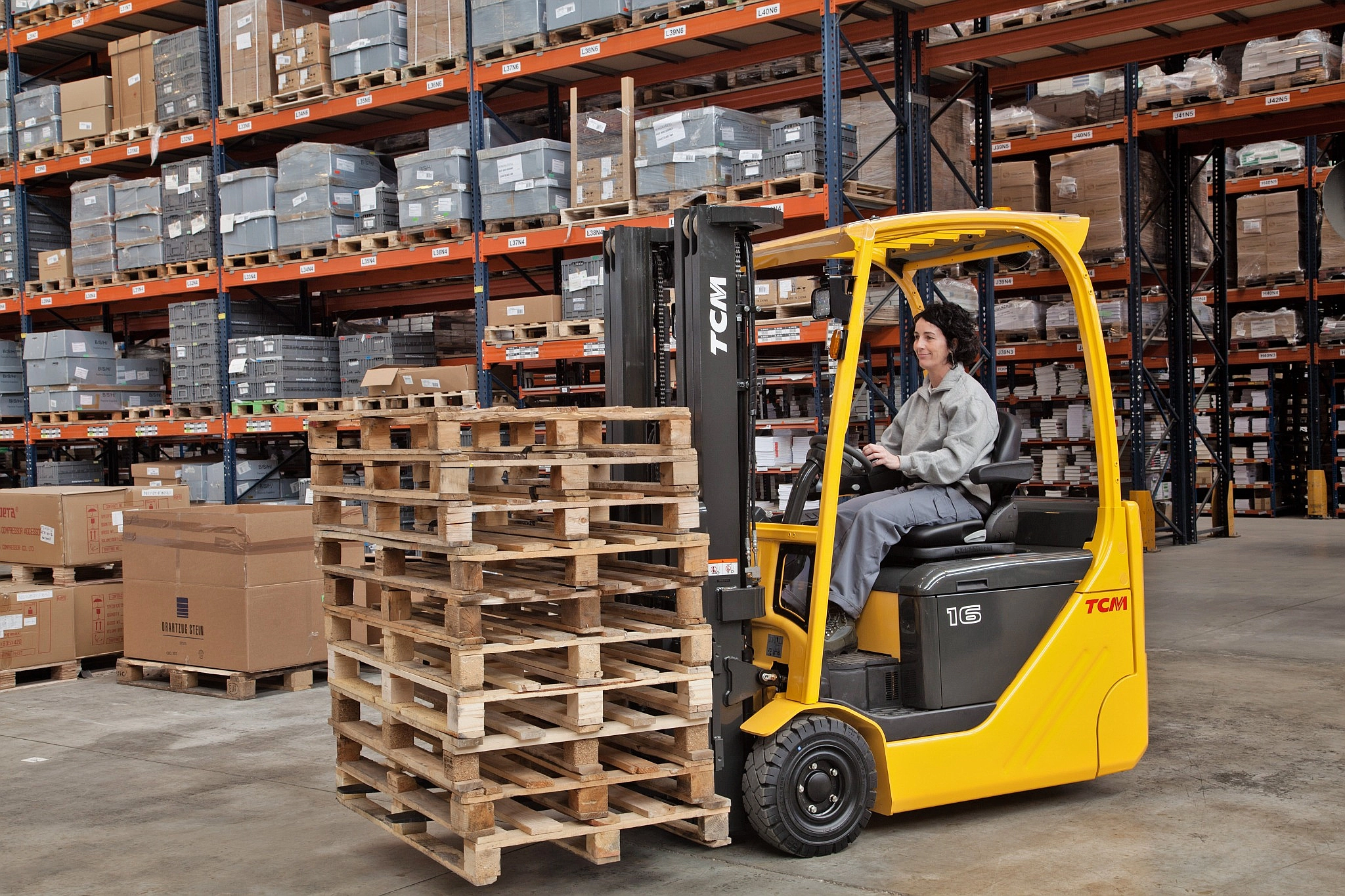
Growth around Muswellbrook can bring more stock, machinery, project materials and workshop activity into the same working week. Some customers need another forklift for incoming freight, while others need equipment for machinery movement, storage work or a concentrated industrial task.
Forklift hire gives businesses and contractors room to cover that work without making the rental machine a copy of equipment already on site. Capacity, lift height, manoeuvring room, and power source can all change depending on what the forklift will be doing.
Current investment around the Thomas Mitchell Drive Industrial Precinct gives Muswellbrook a strong local industrial context for these requirements. MLA Complete Forklift Solutions can support hire and rental across the Hunter region, with equipment selected around the physical work rather than the scale of the surrounding industry.
Warehouse stock, fabricated components and workshop machinery can each place different demands on a forklift.
Pallet receiving may involve repeated low-level movements between a vehicle and storage. Machinery can need more precise positioning and clearer information about support and weight. Outdoor handling may introduce surface conditions that are irrelevant inside a warehouse.
A Muswellbrook customer can narrow the hire by describing the jobs the forklift will perform during the booking.
For example:
MLA’s Newcastle and Hunter forklift hire options cover equipment for warehouse, industrial and project work across the region.
The machine should solve the customer’s workload without adding size or features that make the site harder to use.


Internal-combustion forklifts rely on their cooling system to keep engine temperature within the required operating range.
A new temperature warning, abnormal gauge reading or visible coolant concern on an owned forklift can therefore signal that the machine needs attention before the operator continues treating it as routine behaviour.
Muswellbrook’s industrial and workshop environment gives this condition practical relevance without making maintenance the focus of every local hire. Businesses may operate LPG or diesel forklifts alongside rental equipment used for additional stock, machinery or project work.
Cooling-system readiness can include the coolant level, hoses and connections, radiator condition and the temperature indication available to the operator. A change in one of those areas provides a reason to assess the machine rather than simply adapting the workload around it.
MLA provides forklift servicing and repairs for owned equipment requiring inspection or corrective work.
Temperature information on an owned forklift tells the customer something about that machine’s condition.
Forklift rental answers a separate question: what equipment is needed to keep the planned handling work moving?
Suppose a Muswellbrook workshop has machinery arriving while its own internal-combustion forklift has developed an abnormal temperature reading. Select the rental machine based on the arriving machinery, available space, and required lift. The owned forklift can then follow the appropriate service pathway based on its condition.
Keeping those needs separate avoids carrying an unsuitable capacity, size or power-source assumption from the owned machine into the hire.
Expansion does not always produce a smooth increase in material handling.
New stock can arrive before storage routines are established. Machinery installation may create several heavy lifts in a short period. Contractors can need temporary equipment while an industrial property is being fitted out or altered.
Rental gives Muswellbrook customers another way to cover those peaks while the work is happening.
The hired forklift can be shaped around the role it will perform now. A compact warehouse machine may suit repeated pallet work. A heavier counterbalance forklift may be needed for machinery or fabricated equipment. Outdoor industrial work may call for another configuration.
There is no reason for every temporary increase to become a permanent fleet decision before the workload has proved what it needs.
For customers operating several different tasks, the most demanding lifts should still be identified alongside the routine work so the rental machine can cover the job without becoming unnecessarily large.


Engine-temperature changes should be treated as information about the forklift, not as something operators gradually learn to work around.
A warning indicator or abnormal gauge reading may accompany low coolant, a cooling-system defect or another condition requiring assessment. Continuing loaded work while the machine is showing a new temperature concern can allow the underlying problem to worsen.
Service attention should follow the condition found on the owned forklift.
Rental equipment remains focused on the customer’s handling requirements, with safety tied to the load, rated capacity, and the site where the hired machine will work.
Yes. Forklift rental can support pallet handling, machinery movement, project materials, warehouse work and other industrial lifting where the machine suits the loads and operating area.
Treat the change as an equipment-condition signal and arrange appropriate assessment before relying on the machine for normal loaded work. Investigate the warning rather than treating it as the new operating baseline.
Only where the same configuration suits the temporary work. Load weight, lift height, operating space and the role of the rental machine should determine the equipment selected.