

A workshop knows its gantry crane is rated to five tonnes. A heavy item that normally moves beneath that crane now needs to travel across the floor, be unloaded outside or reach another part of the premises by forklift. Asking for a five-tonne forklift can sound like the obvious next step.
The crane rating is useful information, but it does not select the forklift.
MLA Complete Forklift Solutions can arrange forklift hire and rental in O’Connor around the load as it will actually be carried on the machine. For an ordinary pallet, workshop delivery or machinery movement, that may remain a straightforward hire. Where the customer is working from a known crane capacity, the important step is separating what that number tells them from what the forklift must be rated to do.
A gantry crane lifts a load from above through its lifting arrangement. A forklift supports the load on forks or an approved attachment in front of the machine.
That changes the capacity question.
Forklift rated capacity is tied to an approved load centre and machine configuration. The load capacity data plate can account for factors such as lift height, mast configuration, tyres, attachments and load-centre distance.
So even when the item’s weight is already known accurately from workshop records or previous crane lifts, that weight is only one part of the forklift decision.
A compact heavy item supported close to the carriage creates a different condition from a deeper item whose weight sits farther forward. An attachment can introduce another change. The height at which the load needs to be handled can matter as well.
MLA’s guidance on forklift load ratings and load centres explains why the approved data plate, rather than a simple tonnage label, is the reference for the forklift configuration being used.
The customer does not need to calculate a new capacity from a formula. The better starting point is the real load and the way the forklift needs to carry it.
O’Connor remains an established industrial precinct with workshops, warehouses, manufacturing premises and service businesses. Industrial properties in the area include workshops fitted with substantial gantry cranes.
That creates a believable handover between two different forms of lifting equipment.
A fabrication business may use an overhead crane comfortably inside the workshop but need a forklift to move completed work into the yard. Machinery may arrive by truck and need to travel from the unloading point to a crane-served work area. Another business may simply need to reposition workshop equipment without involving its crane at all.
The customer goal in each case is movement, not matching two capacity labels.
For a normal pallet delivery, MLA’s Perth forklift hire range includes counterbalance and warehouse equipment for different handling roles. A contractor, property customer or smaller business can also arrange suitable forklift hire without operating a crane or running a large industrial facility.
The crane comparison only matters where an existing lifting rating is being used to judge what forklift should perform the next movement.
Knowing the actual load weight is a strong starting point.
It removes the guesswork that can occur when someone only knows that a machine, fabricated assembly or packaged item is “about four tonnes.”
What it does not establish is the forklift’s required rated capacity in the proposed configuration.
Consider an assembly that a workshop crane has lifted many times. Once that assembly is carried on forks, its depth and centre of gravity influence how its weight acts on the forklift. If a special attachment is required, the approved forklift rating needs to reflect that configuration too.
This is why copying the crane’s safe working load into a rental request can give false confidence.
It can also go the other way. A customer may assume they need an unnecessarily large forklift because the workshop crane has a high rating, even though the particular item being moved is much lighter and presents a conventional forklift load.
The job should select the capacity class rather than the largest lifting number visible in the building.

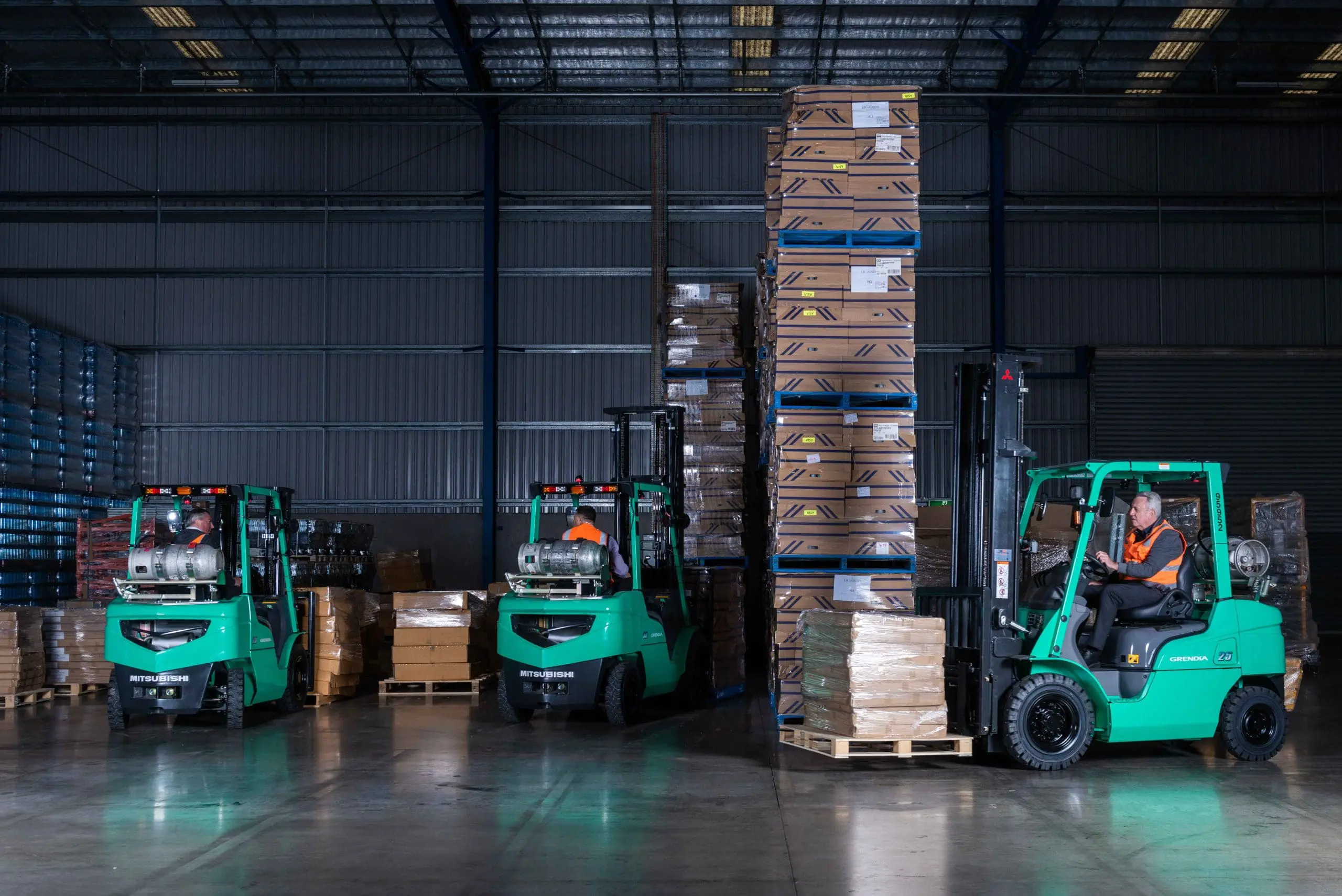
A forklift’s data plate belongs to the machine and its approved configuration.
If the forklift uses an attachment that changes that configuration, the applicable rating needs to reflect it. The same principle applies when an owned forklift has been altered or when a customer is unsure whether the existing capacity information still represents the machine as it is currently equipped.
That is a useful point for service and parts work as well as rental.
MLA services and repairs different forklift makes and models through its Perth operation. If an existing machine has a fault, damaged component or configuration question, the issue can be assessed rather than allowing an old assumption about capacity to continue simply because the forklift has handled similar work before.
Where a part requires replacement, the component should follow the identified machine and repair requirement.
For operators, the approved load information should remain readable and relevant to the forklift being used. A familiar workshop job does not make exceeding the machine’s rated configuration acceptable.
An O’Connor business may need another forklift because a fabrication job has reached a stage where materials must move around the premises. A temporary machine may be required when normal handling demand increases. Rental can also cover suitable work when an owned forklift is unavailable.
In each case, the hired machine should be selected for the handling role it is taking on.
If the forklift only needs to move conventional pallets, there is little value in specifying it from the capacity of a gantry crane used for completely different lifts elsewhere in the workshop.
If the forklift is carrying the same heavy assembly normally handled by the crane, then the known weight becomes part of a more specific capacity discussion.
That keeps both ordinary hire and heavier workshop handling within the same practical process.


If the number you already know is the crane rating, bring it into the conversation as context rather than treating it as the forklift specification.
What MLA needs to establish is whether the proposed forklift, in the configuration being supplied, is appropriately rated for the actual load and movement.
For an O’Connor job involving a known heavy item, the Perth team can work from the item being handled and the way it needs to sit on the forklift. For an ordinary delivery or pallet job, the enquiry can stay just as straightforward without borrowing a capacity number from unrelated workshop equipment.
That cannot be assumed from the crane rating alone. Forklift rated capacity applies at specified load centres and configurations, so the actual load and the forklift’s approved data plate need to be considered together.
Yes. A reliable load weight is very useful, but it does not replace the need to consider how the weight is positioned on the forklift and the configuration in which the machine will work.
Yes. Attachments can affect the applicable forklift rating. The machine should have capacity information appropriate to the attachment and configuration being used.
Past use does not replace the approved rating. If there is uncertainty about the forklift’s current configuration, load plate or condition, that should be resolved before assuming previous practice proves the lift is suitable.
Yes. Forklift hire is available for suitable ordinary jobs such as pallet handling, deliveries, workshop equipment and project materials. A crane-related capacity question only needs to be part of the enquiry where it is genuinely relevant to the load being moved.










