

The shower has passed, deliveries are moving again, and the warehouse floor inside is dry. Outside, the loading area is still holding moisture. The forklift now has to cross from one surface condition to another while carrying a load.
That transition can change how the truck grips, slows and responds under braking. It is easy to overlook because neither area has to be flooded or visibly hazardous. The difference may simply be wet external concrete meeting a dry internal floor.
For forklift hire in Oxley, MLA Complete Forklift Solutions can match the machine to the load and the environment it will actually cross. The discussion should include the outdoor-to-indoor movement where it forms part of the job, especially after rain or wash-down leaves one section wetter than the other.
Tyres generate different traction on different surfaces. A forklift travelling predictably on dry concrete may feel different as it moves onto a wet section, and the reverse transition can matter as well.
The operator may need to slow earlier, avoid abrupt changes of direction and allow for the way the load responds as traction changes. Braking behaviour should remain controlled rather than relying on a hard stop once the truck reaches the doorway.
A meaningful change in grip deserves attention when the machine repeatedly moves between two different surface conditions. The forklift still needs to suit its normal capacity, lift and load requirements, but the ground beneath it is part of the working environment too.
MLA’s Brisbane forklift hire range covers equipment for warehouse, industrial and other materials-handling work. The right choice still depends on the load, operating area and role assigned to the truck.
Around Blunder Road, Factory Road and Douglas Street, Oxley has established industrial, warehouse and showroom premises where loading areas, hardstand and internal floors can form part of the same materials-handling job.
That makes the surface transition relevant without turning the issue into a flood story.
A wholesaler may unload outside and transfer pallets directly into storage. A contractor could move project materials from an external delivery point into a workshop. Someone hiring a forklift for one substantial delivery may only cross the threshold a few times, but the condition still matters while the load is on the forks.
The same movement can become more frequent when extra handling capacity is brought in for receiving or stock work. If another truck is assigned mainly to outside-to-inside transfers, it may experience that change in grip far more often than equipment working entirely within the warehouse.
The operator needs to know what the surface is like before the tyres reach it.
Standing water, surface contamination and obvious debris should be dealt with rather than absorbed into normal operation. The load should also be stable before travel begins, because a change in grip is harder to manage when the pallet is already poorly supported.
This is where smooth driving input matters.
A sudden steering correction or aggressive brake application can combine with the traction change at exactly the wrong time. The operator should keep the movement controlled and respond to the conditions rather than drive the transition as though both surfaces behave identically.
The truck may feel more predictable again once all tyres are on the same surface condition.
That does not make the threshold insignificant. If every pallet crosses it, the transition becomes a repeated part of the job and should influence how the work is approached and how suitable equipment is considered.

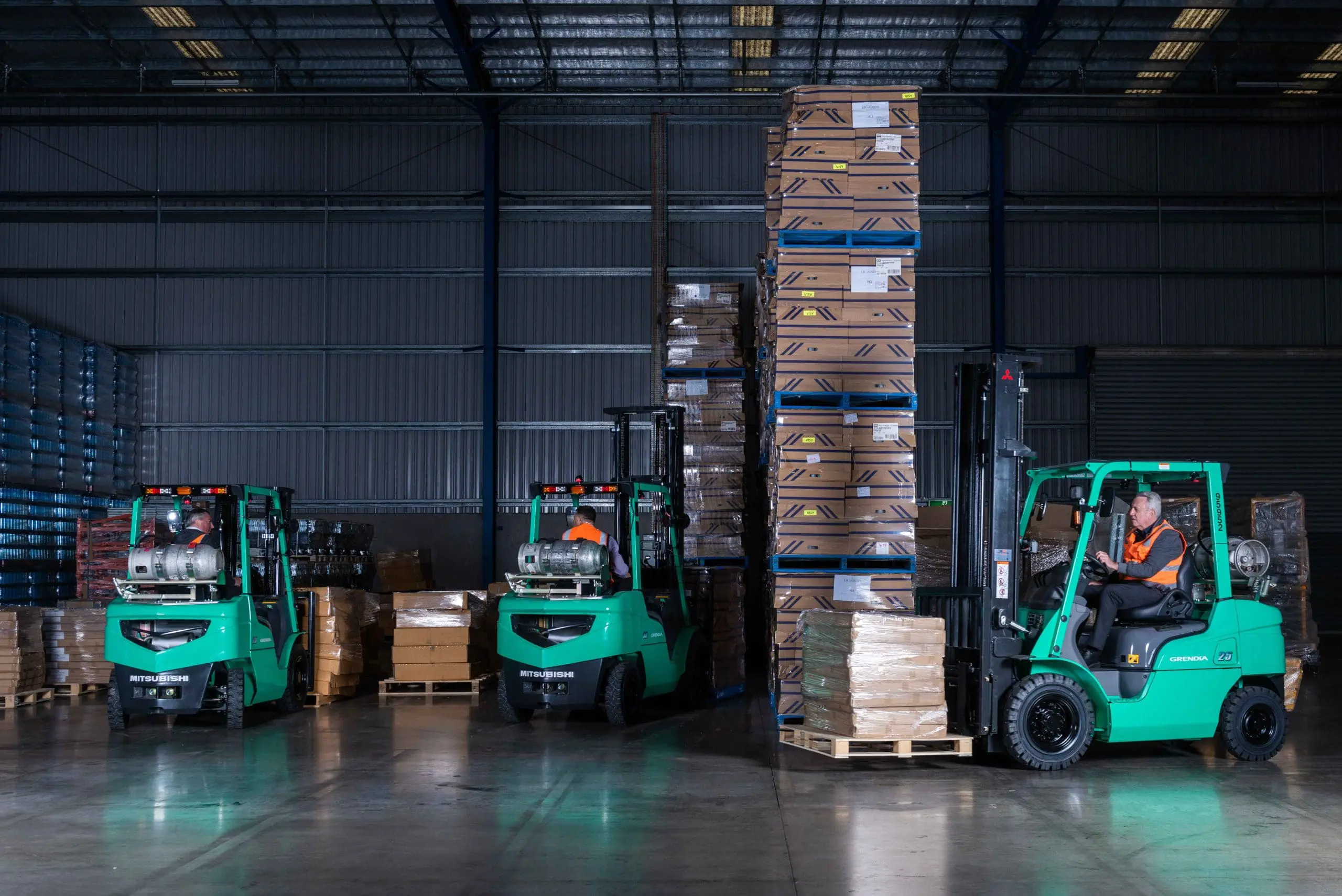
A detailed pavement report is unnecessary. A clear description of the work usually gives MLA the information that matters.
It helps to establish:
Those facts provide more context than choosing capacity alone.
For a defined project, the forklift may cross between yard and warehouse repeatedly for several days. If the same movement becomes part of an established rental role, the equipment should suit that environment consistently rather than being selected only around the first lift.
An occasional customer faces the same basic requirement. One machinery delivery or concentrated pallet job can still involve several loaded crossings between wet external concrete and a dry internal floor.
Rain can make poor braking or worn tyres more noticeable, but weather should not be blamed for a truck that is not operating correctly.
If braking response, steering or tyre condition raises concern, the equipment needs attention rather than an operator compensating by simply driving more cautiously. MLA’s forklift service and repair support can address suitable mechanical requirements, with any parts requirement following the fault that has actually been identified.
Operators using rental equipment should also complete the relevant pre-start checks and become familiar with the truck before taking a load across changing surface conditions.
This keeps servicing connected to the Oxley problem rather than creating a separate maintenance story. Reliable braking and predictable steering matter most when the surface itself is already changing beneath the machine.


An Oxley forklift job may have a perfectly clear pickup point and final position while the most important change happens between them.
If loaded travel crosses from an external area that can remain wet after rain into a dry warehouse, include that movement when the equipment is being considered. MLA’s Brisbane team can work from the load, operating environment and handling role rather than treating the doorway as an incidental part of the job.
The best result is uneventful: the operator crosses the change in surface with the load controlled, the forklift behaving predictably and no surprise waiting at the threshold.
Not by itself. Tyre condition, surface type, the actual level of wetness and the forklift’s broader operating role all matter. Describe the working environment first rather than assuming one tyre choice will solve every wet-surface issue.
Then the condition of that outdoor work area becomes the main consideration. The wet-to-dry transition has less influence if the forklift never crosses between the two surfaces, although traction still needs to suit the area being used.
Yes. A brief rental can still include repeated loaded crossings. The number of days on hire does not remove the traction change if the work itself includes it.










