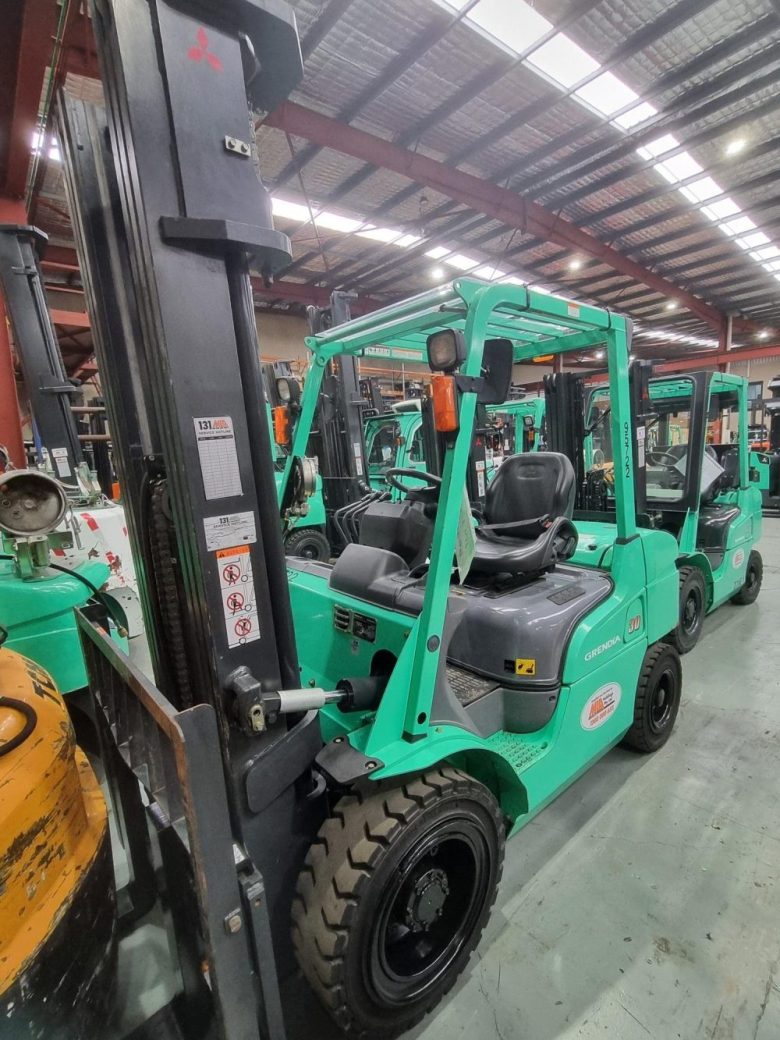
The normal forklift is moving empty pallets, returnable packaging or damaged stock while customer orders wait for attention. A short rental assigned to that secondary stream can leave the established machine with saleable goods, receiving or dispatch instead of making every movement compete for the same capacity.
Ravenhall sits within one of Melton’s major industrial and logistics concentrations, and the broader precinct also has a recognised resource-recovery role. Alongside those material flows, a contractor unloading project supplies, a property owner positioning machinery, a facility receiving a heavy item, or an individual coordinating a suitable delivery can use a one-day or longer forklift rental.
Empty pallets, reusable containers, rejected goods and non-saleable materials are often treated as work that can wait. The problem begins when they occupy the loading area, block access to active stock or require the normal forklift at the same time as customer-facing work.
A few movements may not matter. A growing backlog can change the whole shift. Receiving loses floor space. Dispatch staff wait for the forklift to return. Saleable stock is handled twice because packaging or damaged goods are sitting in the more useful position.
The customer does not need a waste-management program to recognise the cost. The question is whether secondary handling is repeatedly taking equipment away from the work that earns revenue or keeps the site operating.
The most practical arrangement separates the competing jobs.
The owned forklift may remain with incoming stock, warehouse movement or outbound orders. A rental can handle a defined cleanup, move returnable packaging to a holding area, or support a recurring transfer of materials that are not part of the normal sales flow.
The rental does not have to copy the existing machine. Secondary handling may happen outdoors, involve bulky empty pallets or require different fork spacing and visibility. The equipment should match that role rather than being selected only because it resembles the forklift already on site.
The separate role can stay deliberately narrow. It may cover only the accumulation that is blocking active work, or it may continue through a contract, a seasonal peak, or a repeated return cycle. Defining that role makes utilisation easier to judge and prevents the rental from drifting into unrelated tasks simply because another forklift is present.
MLA’s Melbourne forklift rental options include short and longer arrangements across counterbalance and warehouse equipment categories. The commercial result is straightforward: the normal machine stays with priority work, while the secondary stream receives enough capacity to stop becoming a blockage.


One-day hire can suit a concentrated clean-up where the loads, destination and work area are already known. The forklift may clear accumulated pallets, relocate reusable packaging or move confirmed stock that has been set aside.
Project rental is more useful when the work continues across several days. Collection timing may vary, returnable items may keep arriving, or damaged goods may need to be sorted before their final movement. Keeping suitable equipment through that active period can prevent the backlog from rebuilding after one productive day.
Longer rental deserves consideration only when the secondary stream has become a normal part of the operation. If one forklift is routinely diverted from saleable stock, a separate equipment role may be more useful than repeated short bookings.
A single truck unload, machinery placement, fitout, warehouse task or temporary capacity gap can also be booked around its own load and workplace requirements.
A second rental solves a capacity conflict only when the existing forklift is fit for the work it keeps. If the normal machine has a warning, damaged fork, hydraulic concern or overdue service requirement, the condition still needs attention. Forklift servicing, repairs and accurately identified parts enquiries can address that equipment issue.
Temporary rental may cover a confirmed work role while the machine is unavailable, but hire should not be presented as the repair itself. One decision assigns enough equipment to the work. The other restores or maintains the forklift already owned.
Secondary materials are not automatically simple loads.
An empty pallet can have broken boards or protruding nails. A damaged pallet may no longer support the remaining goods evenly. Returnable containers can be stacked inconsistently, while rejected stock may have shifted inside torn or wet packaging.
These conditions affect stability, fork entry and visibility. The forklift should not lift a load merely because it was moved successfully before. The support must be checked again, and unstable goods may need to be restacked, repackaged or handled another way before movement.
Any attachment must be approved for the forklift and reflected in its rated configuration. The operating choice should account for the real load, not the assumption that empty or non-saleable items carry little risk.
This is the safety issue associated with the Ravenhall scenario. It protects people, equipment, and active stock without turning the discussion into a generic forklift safety module.


Look at what the normal forklift leaves behind each time it moves pallets, returnables, or non-saleable materials. If receiving, saleable stock or dispatch repeatedly waits, the secondary work may justify its own short rental or continuing equipment role.
Use MLA’s contact page to compare a one-day clean-up with project or longer rental for forklift hire and rent in Ravenhall.
They may justify one when their movement repeatedly pulls the normal forklift away from priority work. A defined rental role can keep the two material streams from competing.
Only after its condition, remaining load and support are assessed. Broken boards, shifted goods or unstable packaging may require restacking, repacking or another handling method before lifting.
It may be enough for a fixed backlog with a confirmed destination. Where returnables, rejected goods, or damaged stock continue to arrive, project rental may prevent the same obstruction from rebuilding.