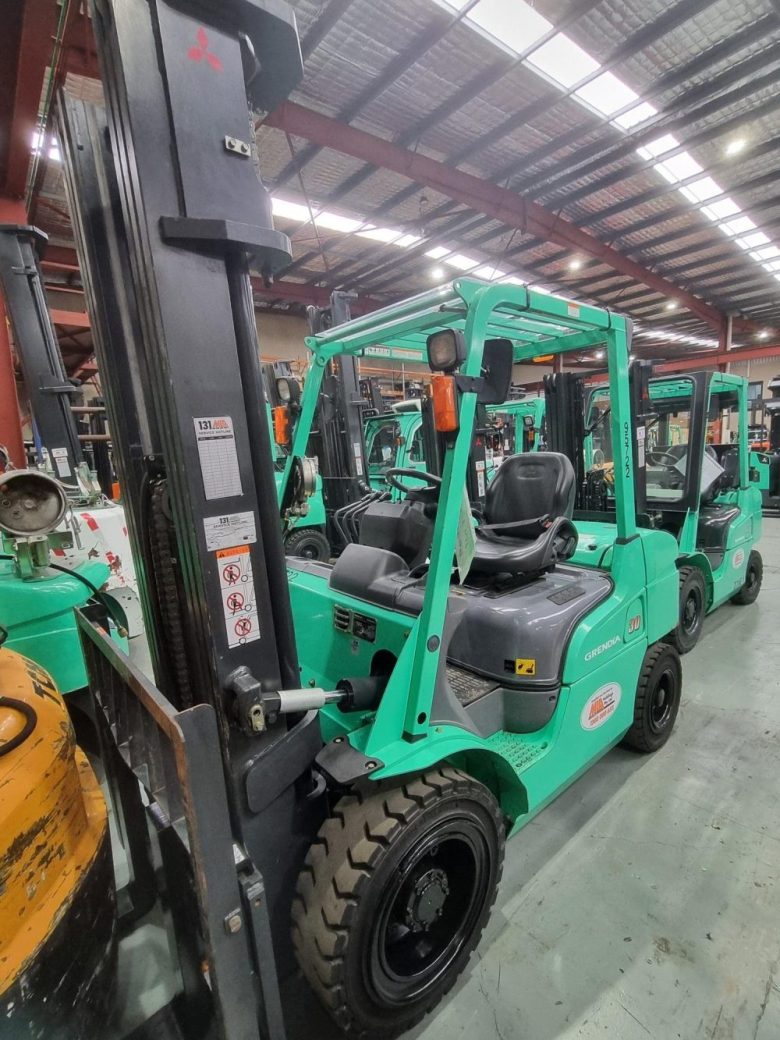
Raw materials are waiting at receiving while finished pallets are ready to leave. If one forklift keeps switching between both ends of the operation, intake blocks space, production waits for replenishment and dispatch loses time. A rental assigned to one side can leave the existing machine with the other, giving each forklift a clear role instead of making every load compete for the same equipment.
That is one Shepparton situation, not the only reason to hire. A property owner may need machinery unloaded and positioned. A contractor may have several heavy movements during a project. A farm, workshop, supplier or community facility may need equipment for one planned delivery, even if it does not normally operate a forklift. One-day hire, project rental, and longer arrangements can all begin with the load, the workplace, and the required period.
Greater Shepparton’s agriculture, food production, manufacturing and freight economy creates workplaces where materials arrive at one end and finished goods leave from the other.
A processor may need packaging or ingredients brought to production while finished goods are moving to storage. A manufacturer may receive components as completed orders wait for dispatch. A warehouse may be unloading customer stock while another part of the site prepares deliveries.
The same pressure can appear on a smaller scale. A grower may need incoming supplies moved before outgoing produce is loaded. A workshop may be receiving parts while completed equipment is waiting for collection. The customer consequence is easy to recognise: a working forklift can still become the bottleneck.
The most useful temporary arrangement is usually the one with the clearest responsibility.
A rental can remain with incoming pallets, bins or materials. The normal forklift stays available for production support, racking or finished stock. This can reduce receiving congestion and stop new deliveries from displacing work that is already underway.
The rental can take responsibility for finished pallets, order staging or loading. The existing machine remains with materials that production still needs. Customer orders are less likely to sit behind the next inbound vehicle.
The decision depends on what work the additional machine will remove from the existing one. The intake task may involve outdoor unloading and mixed loads, while dispatch may rely on pallet storage and repeated indoor travel. Equipment selection should follow the side of the operation it will support.
MLA’s forklift rental options include short and longer arrangements across counterbalance and warehouse equipment categories. Where the job is simply one machinery delivery, pallet unload or stock move, the equipment can be selected for that defined task without creating a broader fleet plan.


Materials do not always leave in the same form in which they arrived.
Inputs may come in bins, crates, stillages or standard pallets. Finished products may be wrapped, boxed or stacked differently. The weight may remain within a familiar range while support points, load depth, stability and visibility change.
A forklift suited to unloading a stable pallet outside may not be the best option for placing packaged goods into warehouse storage. Where the work is mainly internal pallet movement, MLA’s warehouse forklift range provides a relevant comparison.
The customer should identify the load that creates the more difficult decision. A bin with uncertain support, a damaged pallet or packaged goods that restrict visibility may affect fork choice, attachment requirements and usable capacity.
Safety belongs inside this selection. The load must remain stable, any attachment must be approved for the forklift, and the rated configuration must cover the actual weight, load centre and lift.
A one-day booking may solve a concentrated unload, machinery placement or dispatch task. Short rental may suit a production run, seasonal intake, temporary contract or period of higher order volume. A longer rental may become practical when both ends of the operation remain active, and the extra equipment has a continuing role.
The hire term should cover the period when work is genuinely competing for the normal machine. It should not end while receiving or dispatch is still falling behind, and it should not continue simply because the site has become accustomed to having another forklift.
A clear role gives the customer something useful to review. If intake clears and the rental becomes idle, the temporary need may be ending. If the machine remains fully occupied after the original peak, a longer arrangement may deserve discussion.
An existing forklift fault can change the same decision. Service or repairs may be needed where reduced reliability is contributing to the backlog. A known parts requirement should be identified accurately rather than worked around. Rental can protect the assigned intake or dispatch task while the equipment issue is addressed.


Identify whether incoming materials, production replenishment or finished goods are losing the most time. For a one-off customer, explain the single load, where it must finish and why suitable equipment is needed.
Use MLA’s contact page to discuss forklift hire and rent in Shepparton around the movement that needs to keep going.
Assign it to the side creating the clearest delay. The choice should protect the work with the strongest effect on production, customer orders or available space.
Not necessarily. Outdoor unloading, bin handling, warehouse travel and finished-pallet storage may point to different equipment categories.
One machine may remain practical when the peaks are separated. Rental becomes more useful when overlap repeatedly leaves one side waiting.
Yes. The term can follow the confirmed period of increased intake, production or dispatch rather than becoming a permanent commitment.
Yes, where the load, workplace and operator arrangements are suitable. You do not need to run a warehouse or own a forklift.
Review whether the assigned intake or dispatch task is still occupying the rental. Ongoing use may support a longer arrangement, while idle time may show that the temporary pressure has passed.