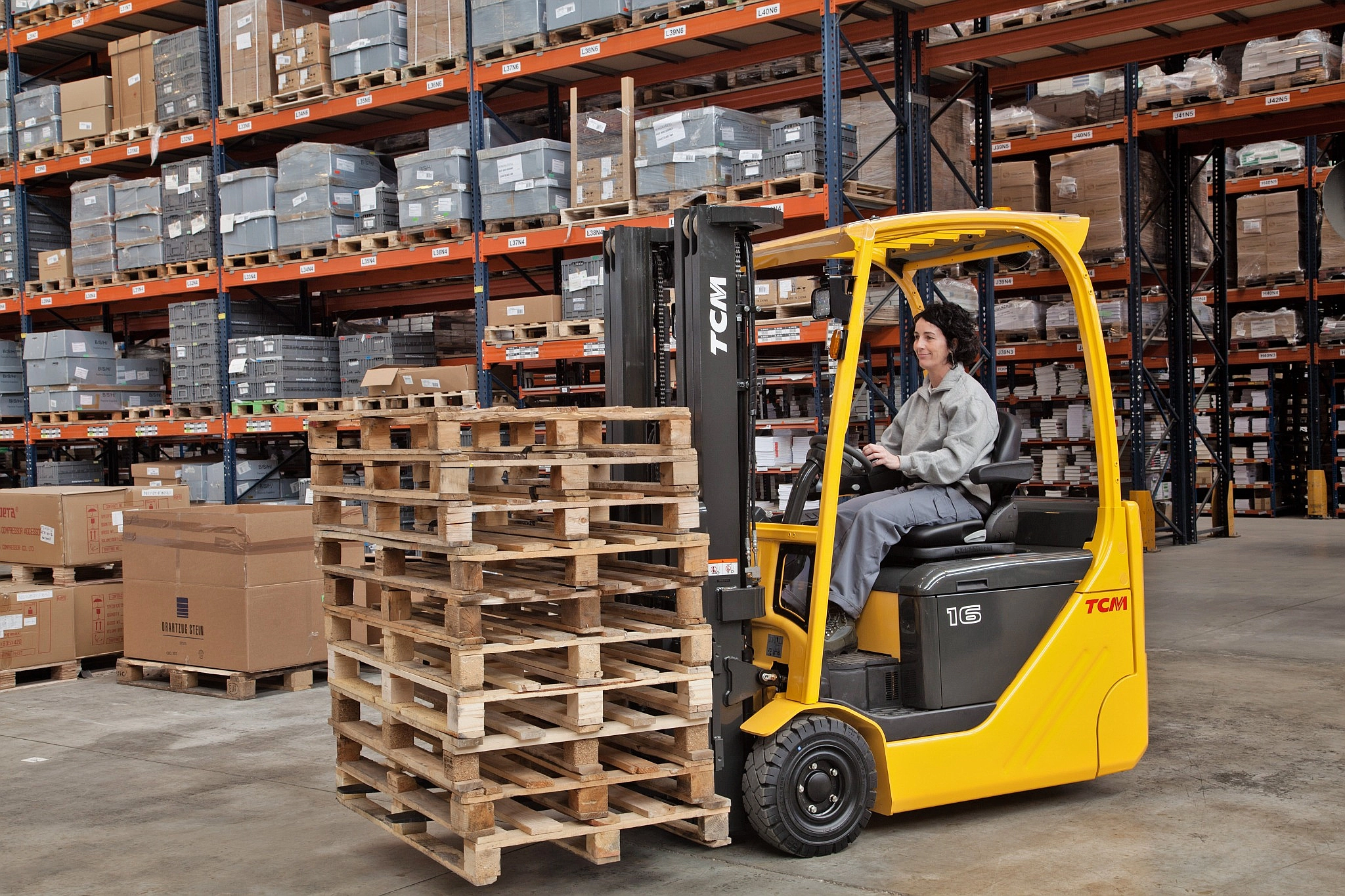
Somersby supports many kinds of forklift jobs. Manufacturing plants, warehouses, engineering businesses and construction suppliers operate throughout the industrial area, while contractors and other customers can have machinery, building products or equipment arriving for shorter pieces of work.
That breadth is especially visible in local manufacturing. Borg’s current Central Coast operations include board and decorative-product manufacturing in Somersby, and Central Coast Council identifies Somersby as the region’s largest concentration of general industrial land.
Forklift hire and rental through MLA Complete Forklift Solutions can support receiving, production, workshop and project work without assuming every customer needs the same machine or handling setup.
A warehouse may need stock unloaded and carried into storage. A manufacturer could have materials moving between production and dispatch. Contractors may need equipment positioned during installation work, while another customer has a machine arriving that only requires mechanical handling for one stage of the project.
The forklift should be selected for the movements assigned to it.
Where machinery is involved, the transport base and intended support points may deserve attention. A receiving job with packaged goods may be easier to describe. Some Somersby work can also involve manufactured products whose length and flexibility introduce a different question from weight alone.
Customers comparing temporary equipment can review MLA’s forklift rental range. The machine choice can then follow the load, working area and lifting requirement at the site.
Somersby’s manufacturing base provides a particularly relevant example through locally produced board and panel products. Borg currently identifies Somersby as one of its Central Coast production locations for decorative board products, while its wider Australian Panels business manufactures products including particleboard, MDF, melamine panels and structural panel products.
A long flat panel or bundle can present a forklift with a support question.
The total weight may sit comfortably within the truck’s capacity, yet a long product can still flex if too much of its length is left unsupported. The behaviour depends on the product, its packaging, the carrier underneath it and the handling arrangement intended by the supplier or manufacturer.
Fork spacing, fork length and any suitable carrier therefore need to work together so the load is supported across enough of its length for the planned movement.
A customer should follow product-specific handling instructions where they are supplied. The local example demonstrates the principle without assuming how products at any named Somersby facility are handled.


Choosing a forklift with a higher capacity only answers one part of the problem.
Imagine a long pack whose gross mass is well below the truck’s rating. If the pack projects a considerable distance beyond the supported area, increasing forklift capacity does not make the unsupported sections more rigid.
The handling setup needs to suit the load’s physical behaviour.
That might involve a purpose-suited pallet, bearers, stillage or another approved support arrangement that distributes the load appropriately. Some applications may also call for compatible specialist equipment or an attachment designed for the material being handled.
MLA supplies a range of forklift attachments for different handling applications. Any attachment needs to be compatible with the forklift and included in the truck’s applicable capacity assessment.
For customers dealing with long manufactured goods, the first question is therefore not simply how much the pack weighs. How it will be supported during the movement belongs in the equipment discussion as well.
The same hired forklift could also be dealing with machinery, packaged inputs or finished goods that do not flex in the same way.
A machine on a purpose-built transport base may bring clearly defined support points. Components arriving in crates can have their own handling information. Palletised stock used around a workshop or production site may already be presented in a form intended for fork handling.
Several compatible movements can sit within one rental where the machine suits each task.
If a long panel pack is only one part of the work, it should receive the support planning it needs without turning every other load into a panel-handling problem. The customer can keep the remainder of the booking centred on what those goods require.


Long goods can extend farther beyond the forklift than more compact loads, so the operator needs control of the entire handling unit and enough working room for the movement being made.
Before lifting, the pack should be stable on its intended support, and the operator should understand how the supplied forklift or attachment is to be used. Any wrapping, strapping or other restraint used to keep the bundle together should also be in suitable condition.
The work area should accommodate the complete load during the movements planned. That is especially relevant where the product projects well beyond the truck itself.
An unrelated fault on a customer-owned forklift should be addressed with proper servicing before that machine is returned to work. MLA provides forklift service and repair across the Central Coast, including Somersby.
For most Somersby enquiries, start with the load that is waiting to move.
A customer receiving machinery might have a supplier weight and details of its transport base. A warehouse could describe its incoming stock and where it needs to be placed. For a long panel or flat manufactured pack, include its overall dimensions and how it will be supported underneath.
MLA can use the relevant information to narrow the equipment and rental requirement before the work begins.
Once the machine is supplied, the customer has a forklift chosen around the planned handling rather than around the general description of the business. If another compatible task is added while the equipment is on site, it can remain part of the work provided the forklift is appropriate for that movement.
Yes. A machinery installation, building-material delivery, workshop change or concentrated stock movement can create a complete forklift hire requirement even where the equipment is only needed during part of the project.
For a long manufactured load, have the carrier or approved support arrangement identified before the booked movement. That gives the forks something suitable to engage when the product is ready to leave the delivery or storage position.