

Reverse travel can become a bigger part of a forklift job than the initial pickup suggests. Stock may be collected inside a warehouse, carried through a tighter work area and backed away from a placement point before the next movement begins.
Forklift hire in Tighes Hill can support deliveries, warehouse stock, machinery, workshop equipment and temporary industrial work where the machine needs to fit both the load and the available room. Capacity and lift height remain important, but manoeuvring through the site can influence the choice just as strongly.
Repeated reversing deserves particular attention where the operator’s view changes with the load, the forklift configuration or the layout of the workplace. In those situations, visibility aids such as a suitable reverse camera may be worth discussing as part of the rental equipment.
Two sites handling the same pallet can place very different demands on a forklift.
Open warehouse space may allow the operator to approach, collect and turn with plenty of room. A more compact industrial unit can require tighter positioning around roller doors, stored equipment or adjoining work areas. Machinery handling may also involve backing away from the placement point because there is limited room to turn around the load.
Tighes Hill has a practical local setting for this type of work. Current industrial premises around Revelation Close combine warehouse and office space with roller-door access and drive-through or hardstand areas, while the wider Industrial Drive corridor retains a strong commercial and industrial role.
Those premises can generate anything from a short delivery unload to repeated stock movements between receiving, workshop and storage areas.
MLA Complete Forklift Solutions can provide forklift hire and rental for these requirements across Tighes Hill and the broader Newcastle area. The machine can be discussed around the load, the working space, and how the operator will move through the site during a normal cycle.

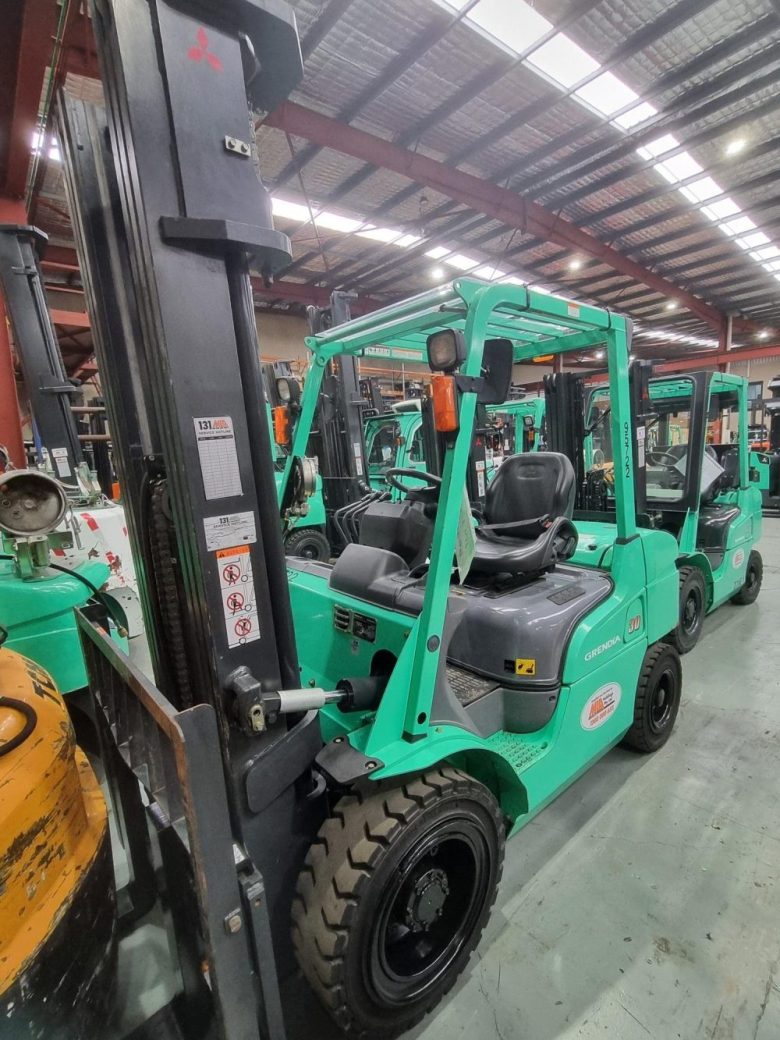
Forklift selection usually focuses first on lifting performance. Visibility becomes more important when the work repeatedly places the operator in reverse.
A rearward movement may only last a few metres, but the operator still needs a clear picture of the area behind the forklift. Loads, mast structure, cab position, stored stock and the surrounding workplace can all influence what can be seen directly.
Suitable visibility aids can support that task.
MLA has identified side mirrors and reverse cameras among the features that may be fitted or selected for forklift applications. A reverse camera can provide another view behind the machine where the job includes frequent backing movements.
Its value depends on the work.
A forklift unloading pallets in an open area and travelling mainly forward may gain little from specifying a camera. Equipment that repeatedly backs from storage positions, machinery placements, or confined work areas presents a stronger reason to consider one.
The camera supports the operator’s view. It does not turn a restricted or poorly controlled area into a suitable forklift route.
The hire description should include more than the direction of the first lift.
Consider a forklift carrying stock into a warehouse bay. The forward journey may be easy to see. Once the pallet is placed, the operator might need to reverse through the same constrained area before turning into the next route.
Repeated cycles like that make rearward travel a meaningful part of the job, not an occasional manoeuvre.
A Tighes Hill workshop can create another version of the same issue. Machinery may be positioned beside fixed equipment, leaving reverse travel as the cleanest way to exit the placement area.
Describing those movements gives MLA a stronger basis for discussing whether a reverse camera, mirrors or another suitable visibility feature belongs in the rental configuration.
Visibility equipment cannot compensate for a forklift that is wrong for the physical lift.
Loaded weight, dimensions, support and required height still set the core equipment requirement. Manoeuvring room can then narrow the machine further.
A compact forklift may work more comfortably inside a smaller industrial unit, provided it still delivers the required rated performance. A heavier machine could suit machinery or dense loads but needs more room around turns and placement points. Electric equipment may fit many indoor jobs where its capacity and duty requirements align with the work.
Customers comparing machines for Tighes Hill can review MLA’s Newcastle forklift hire and rental options after identifying the main lifts and travel areas.
Where reversing is only a minor part of the booking, there is little reason to make it the centre of equipment selection. Frequent rearward movement through tighter sections of the workplace makes a stronger case for visibility assistance.


A reverse camera gives the operator another source of information, but the physical route still needs to support forklift movement.
Stored goods, parked equipment or temporary materials can change the space available behind the machine. People working nearby also affect how the area needs to be managed.
Rear visibility should therefore be considered alongside the route itself.
For Tighes Hill hire work, a practical description can include where the forklift picks up the load, where it places it and whether the machine repeatedly needs to back out of that position. That tells MLA more about the real operating cycle than simply saying the site is “tight”.
The same approach keeps the page relevant to broader hire work. A customer clearing a delivery in open space can keep the booking focused on the load and lift. A workshop repeatedly positioning machinery in confined areas can add rear visibility to the equipment conversation because the work gives it a clear purpose.
Compatible forklifts may be available with a reverse camera or other visibility options, depending on the equipment required and availability. Mention repeated reversing or restricted rear visibility when discussing the hire so the feature can be considered with the machine.
It can add value where the forklift repeatedly travels backwards, especially around warehouse storage, workshop equipment or placement areas that limit direct rearward visibility. The feature should support a suitable travel route rather than replace normal site controls.
Describe the load, required lift, available turning room and the main route through the property. Include any point where the forklift needs to reverse repeatedly or where fixed equipment restricts positioning.










