

The need for a forklift can appear halfway through an otherwise ordinary working day. Machinery may be ready to come off a delivery vehicle, several heavy items may need rearranging before new equipment arrives, or a project may have reached the point where manual handling is no longer practical.
West Gosford has a well-established industrial and commercial area around Manns Road, with workshops, warehouses, trade businesses and other employment uses creating plenty of settings for that kind of work. A forklift may be needed for several days of organised handling or simply for the part of a job where weight and positioning make mechanical lifting necessary.
Forklift hire and rental through MLA Complete Forklift Solutions gives those customers access to equipment selected for the work without requiring a permanent forklift commitment.
Not every West Gosford customer will use a hired forklift in the same way.
A workshop can have a new machine arriving while existing equipment needs to be shifted first. A trade business may need packaged stock unloaded and placed inside its unit. Contractors can have building products or equipment delivered during a commercial project, while another customer is clearing floor space before installation work begins.
The movement itself helps narrow the forklift requirement.
Machinery may have designated fork-entry points or a transport base that should remain underneath it. Palletised products can be more familiar where the carrier is sound, and the loaded weight is known. Positioning equipment within a workshop may make controlled movement more important than carrying the load over any great distance.
MLA’s forklift rental range includes different equipment configurations for temporary handling work. The choice can be based on what has to happen at the West Gosford site rather than on a standard forklift assigned to every industrial customer.
Businesses that already own a forklift have another source of information available every time the machine operates: how it normally behaves.
Operators become accustomed to the sound and response of the mast while raising, lowering and tilting. If a new mechanical noise develops during hoist operation, or vibration appears where the movement was previously smooth, that change deserves attention.
Forklift inspection guidance specifically identifies unusual noises or vibration as conditions that should be reported. Mast chains, hydraulic hoses and other visible mast components also form part of the pre-operation inspection.
The important decision for the operator is not identifying which component has failed.
A new grinding, knocking, scraping or other unfamiliar mechanical sound during mast movement is enough to stop treating the truck as though nothing has changed. The same applies to excessive vibration that appears during operation.
MLA’s forklift service and repair support can be used to inspect the machine and identify the cause before the forklift returns to work, which could be affected by the condition.
Different forklifts have different operating sounds, so this is not about comparing one machine with another.
An operator who uses the same forklift regularly is often well placed to notice when its behaviour has changed. The hoist may still raise the forks while producing a sound that was absent the day before. Tilt may continue to function while vibration or mechanical roughness has appeared.
That observation can be reported directly.
There is no need to decide in advance whether the cause is hydraulic, mechanical, mast-related or something else. Diagnosis belongs with the service assessment.

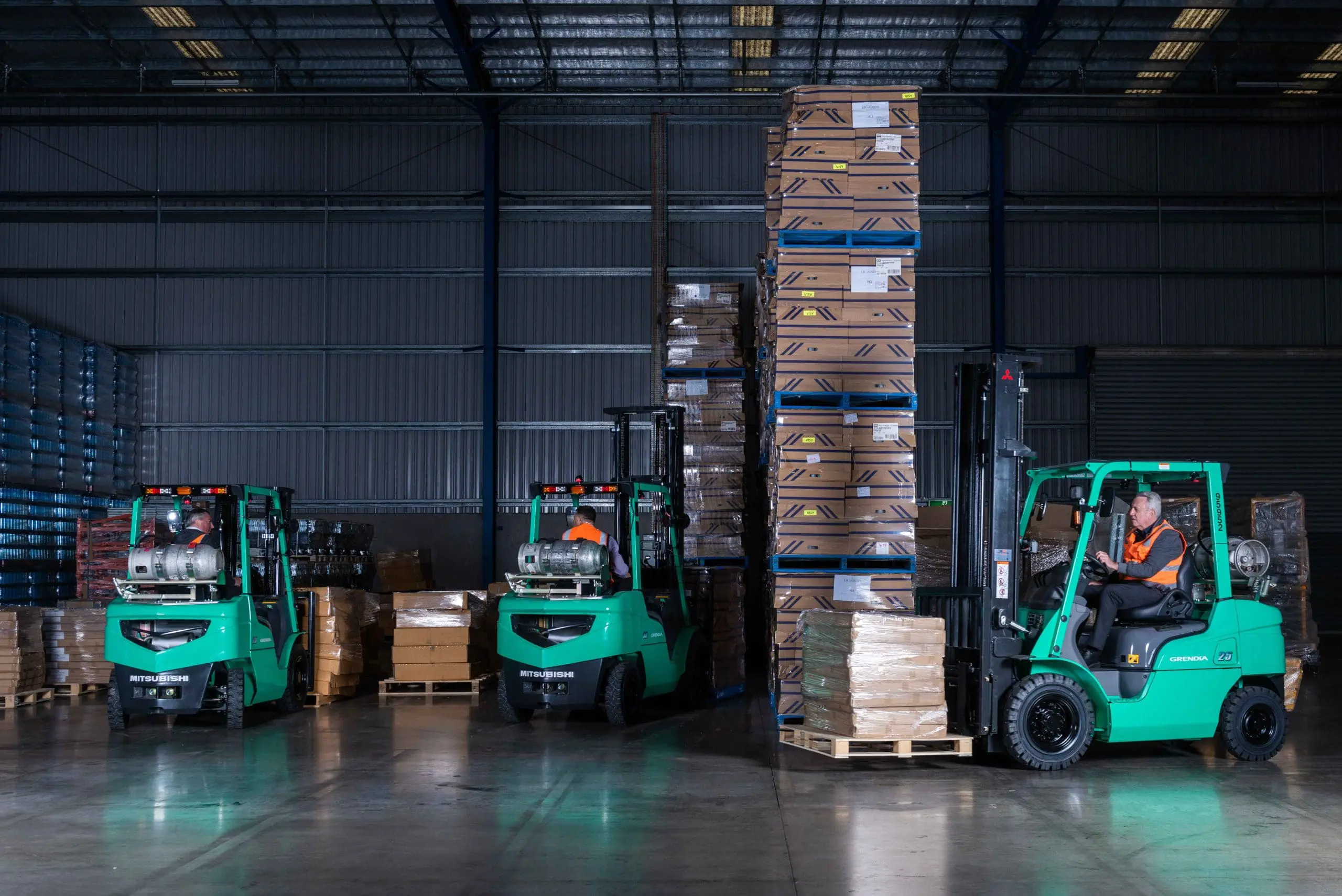
Taking an owned machine out of normal use does not remove the handling work waiting on site.
A West Gosford workshop may have machinery booked for delivery that afternoon. A business could have stock to unload while its usual forklift is being inspected. Another customer may already have decided that the new load calls for equipment different from the forklift normally used on the premises.
Rental keeps that lifting requirement separate.
The hired machine should be selected around the new work, rather than automatically copying the specification of the forklift receiving service. If the incoming machinery is heavier than routine stock, its weight and support arrangement should shape the choice. If the work consists of familiar goods, the rental may be simpler.
This also works for customers who own no forklift at all. The same MLA hire service can support the delivery, project or workshop movement without an equipment fault being part of the enquiry.
West Gosford’s industrial setting can make it easy to picture every customer as a business with its own fleet. Many hire requirements are more occasional.
A contractor can need mechanical help during a fit-out. Building products may need unloading where another lifting method is unavailable. Equipment might need repositioning before a tenancy changes hands. A smaller operator could simply have one item that has become impractical to move safely with the resources already on site.
These customers can describe the movement they need completed and leave the forklift selection until that work is understood.
Where load capacity becomes a meaningful part of the decision, MLA’s load rating and load centre guidance explains how a forklift’s rating relates to the load position as well as its mass.


Suppose a workshop has a machine arriving on Friday.
The customer knows its supplied weight, can see the transport base underneath it and knows where it needs to finish inside the workshop. Those details give MLA enough context to discuss a forklift for the unloading and positioning work.
If the workshop’s own forklift has also developed an unfamiliar mast noise, that machine can be booked for assessment as a separate matter. The rental truck does not need to inherit the suspected fault or the regular forklift’s normal duties. It only needs to cover the handling work included in the booking.
Before the lift, the receiving area and machinery are made ready for the planned movement. Once the machine is in position and any other agreed handling is finished, the rental has completed its purpose.
That gives the customer a clear route through the job without turning the service issue and the hire requirement into one complicated decision.
Stop and report the change rather than continuing loaded work simply because the mast still moves. Unusual noise or excessive vibration can indicate that the forklift requires inspection.
Describe when the sound or vibration occurs and how it differs from the machine’s normal operation. A technician can then assess the forklift and determine what attention is required.
Yes. Rental equipment can be arranged around the loads that still need handling while the customer-owned forklift receives service attention.
The replacement does not have to duplicate every function of the machine being repaired. If the immediate requirement is unloading machinery or moving stock through one part of the site, the hired forklift can be considered specifically for that work.










